






Why Headphones Are Moving to USB-C Audio
The headphone jack is not disappearing overnight.
But the way headphones handle wired audio is changing.
For many years, the 3.5mm audio jack was easy to understand. A phone, laptop, or music player sent an analog signal. The headphone received it. Users knew what to expect, and factories knew how to build around it.
Now, more devices are moving toward USB-C. For headphone brands, this changes the question. USB-C is no longer only a charging port. In some products, it is becoming part of audio input, digital signal handling, microphone control, and multi-device compatibility.
For OEM headphone buyers, this trend is worth watching. The real issue is not whether every product should remove the 3.5mm jack. The more practical question is whether a Type-C charging and audio two-in-one design fits the product, target market, and user scenario.
JBL Shows The Direction
JBL is one of the brands showing this interface shift in real products.
For example, the JBL Tune 780NC product page lists a USB Type-C to analog 3.5mm cable in the box. That detail is important because it suggests wired audio is not being handled only through a traditional independent 3.5mm port.
JBL’s support information gives an even clearer signal. For the Tune 680NC and Tune 780NC, JBL explains that users cannot listen through the 3.5mm Aux cable when the headphone battery is empty. The reason is that the analog 3.5mm signal is converted into USB-C digital signal, so the headphone’s internal circuit still needs power. JBL explains this in its support note about using the 3.5mm Aux cable when the headphones are out of battery.
This does not mean JBL has fully removed the 3.5mm jack from all headphone products.
But it does show a direction: USB-C is becoming more than a charging interface. It is entering the audio structure of headphone products.
JBL also offers USB-C wired products such as the JBL Tune 520C USB-C, which highlights USB-C connection and digital Hi-Res audio supported by a DSP chipset. The JBL Tune 310C USB-C also focuses on USB-C connectivity for modern devices.
For OEM buyers, these examples are useful because they show how major brands are testing different ways to connect headphones to today’s device ecosystem.
Why USB-C Is Becoming More Important
The main reason is simple: the devices around headphones have changed.
Many phones, tablets, and laptops now rely heavily on USB-C. Some no longer include a 3.5mm audio jack. When the source device changes, headphone design has to respond.
This is why USB-C audio is not just a fashion trend. It is connected to a real shift in user equipment.
Android’s documentation about USB-C to analog audio adapters reflects this situation. Some Android devices do not have a 3.5mm port, so USB-C audio adapters become part of the connection experience.
For headphone brands, this creates a design choice.
Should the product keep a traditional 3.5mm jack for compatibility? Should it move toward USB-C audio for newer devices? Or should it use a cable or adapter solution to support both old and new audio sources?
There is no single answer. The right choice depends on the target user and sales channel.
Type-C Two-in-One Is Not Just A Port Change
Some buyers may think a Type-C charging and audio two-in-one design simply means removing one hole from the product.
That is only the visible part.
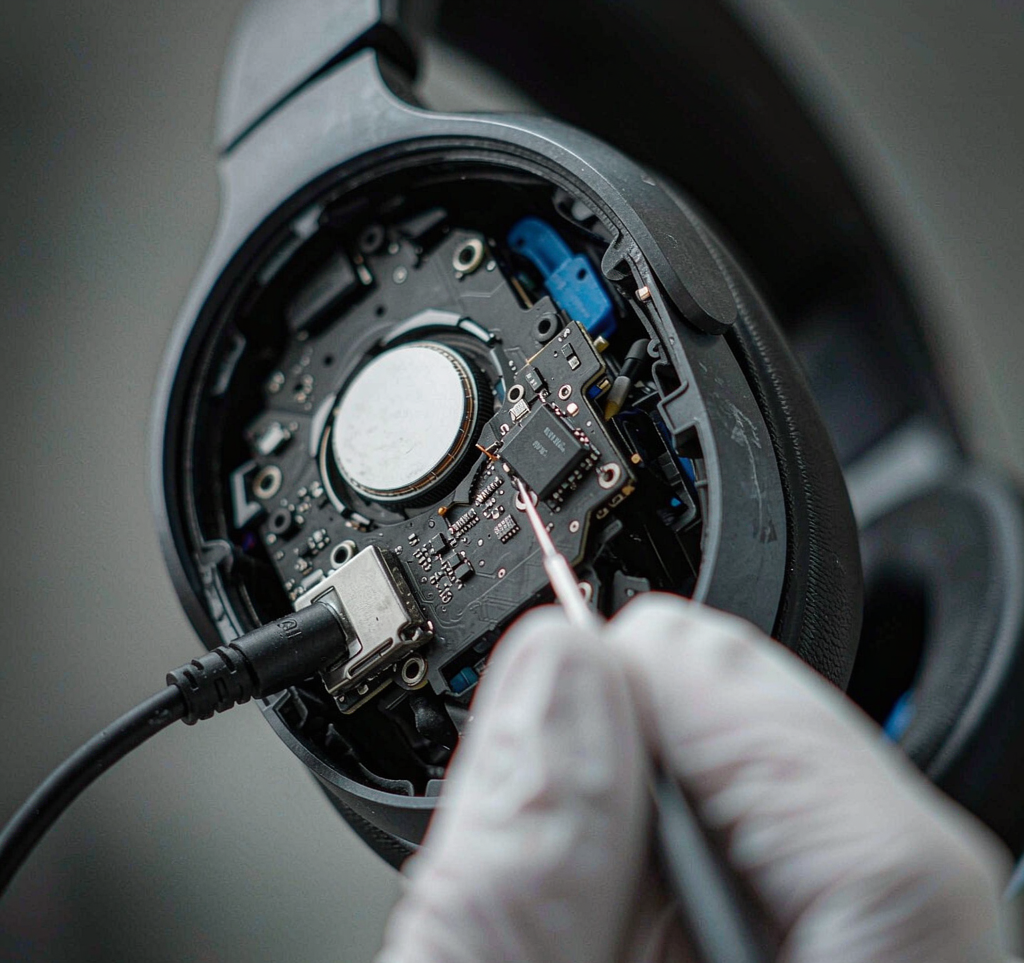
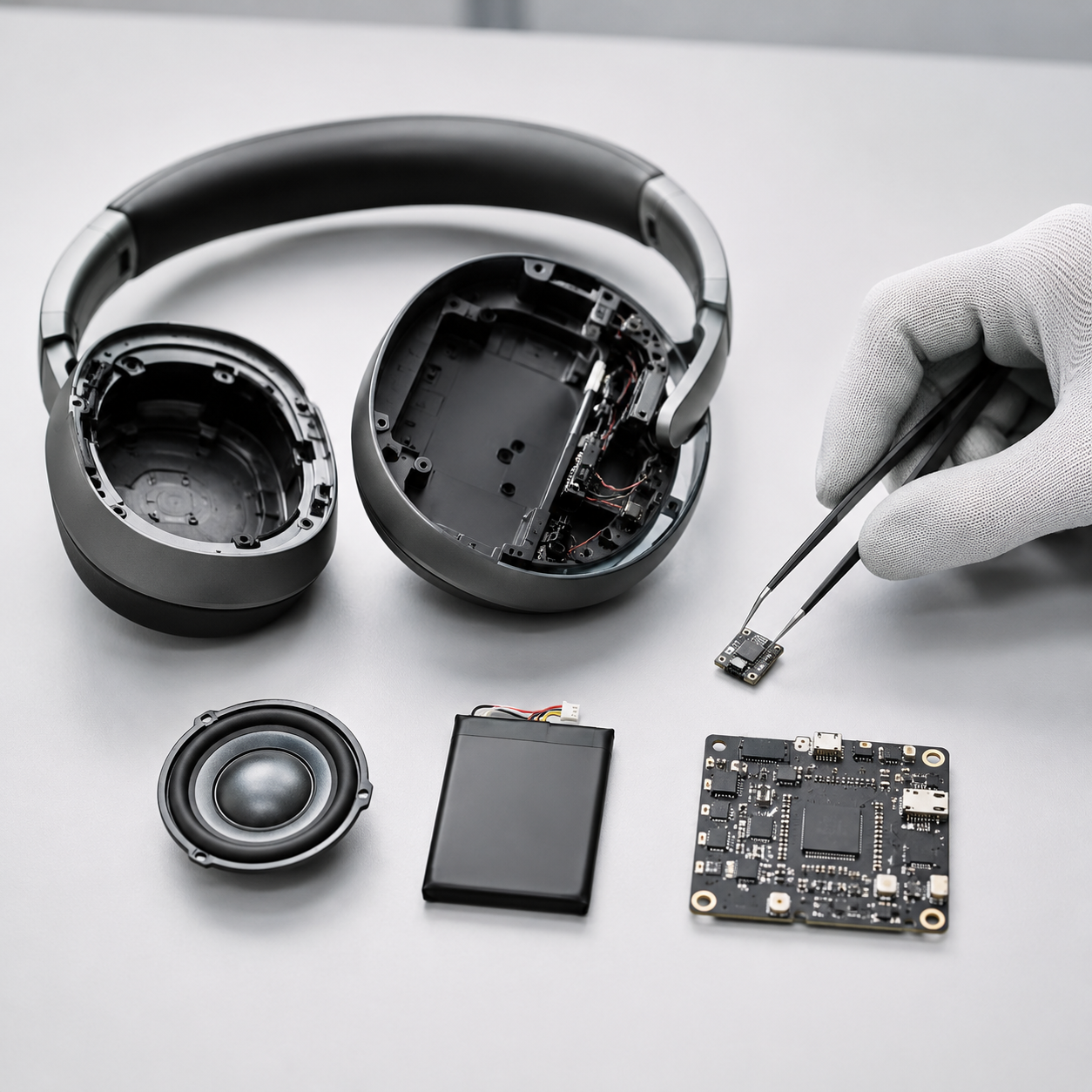
Inside the product, the design may change more than expected. A USB-C audio solution may involve signal conversion, chipset selection, control logic, microphone support, and compatibility testing.
According to the USB-IF USB Audio Devices documentation, USB audio involves audio data and device functions. In other words, USB-C audio is not only about connector shape. It can also affect how the product handles sound.
This is where many OEM projects become unclear.
A buyer may say, “We want Type-C charging and audio two-in-one.” But the factory still needs to know what that means.
Does the port only charge the headphone? Does it also support USB digital audio? Does it support microphone input? Does wired audio work when the battery is empty? Is a USB-C to 3.5mm cable required?
These details decide the real product solution.
What This Means For OEM Buyers
For OEM buyers, the trend toward USB-C audio creates both opportunity and risk.
The opportunity is clear. A Type-C audio design may make the product feel more aligned with modern phones, laptops, and tablets. It may also help brands simplify the product structure and position the product for newer device users.
But the risk is also real.
If the buyer only follows the trend without defining the function, the sample may not match the expected user experience. A product may look modern, but users may later find that wired mode depends on battery power, or that some devices do not recognize the audio function properly.
That can lead to complaints after shipment.
This is why OEM buyers should not treat 3.5mm removal as a purely visual decision. It is a product definition decision.
Before choosing Type-C charging and audio two-in-one design, buyers should confirm the target device environment, user expectations, cable plan, and testing scope.
When Keeping 3.5mm Still Makes Sense
USB-C audio is growing, but that does not mean 3.5mm has no value.
In some markets, users still connect headphones to older computers, audio players, musical equipment, classroom devices, or aviation and office equipment. In these cases, a traditional 3.5mm jack may still reduce compatibility problems.
For entry-level products, keeping 3.5mm may also help avoid extra circuit complexity.
For premium or modern device-focused products, USB-C audio may make more sense. It can support a cleaner structure and a more future-facing product story, especially when the target users already rely on USB-C devices.
The key is not to ask which interface is “better” in general.
The better question is: which interface matches the product’s real use case?
A Practical View For New Headphone Projects
The movement from 3.5mm to USB-C audio is not only about following major brands.
It is about understanding where the user’s audio signal comes from, how the headphone processes it, and what the customer expects after opening the box.
JBL’s products give OEM buyers a useful signal: USB-C audio is already being used in real headphone designs, but different products handle it in different ways.
For a new OEM headphone project, buyers should define the interface strategy early. If the product is designed for newer phones and laptops, Type-C charging and audio two-in-one may be worth considering. If the product needs broad compatibility with older devices, keeping 3.5mm or offering a cable solution may be safer.
The most important step is to make the requirement clear before sampling.
Sonun can help OEM headphone buyers evaluate whether Type-C audio fits their product positioning, target market, and accessory plan. Instead of simply removing the 3.5mm jack, the better approach is to choose an interface solution that supports the real user scenario and reduces risk before mass production.
```