







How to Set Headphone Battery Life Specs That Hold Up in Real Use
Derive Runtime Targets From Real Usage Scenarios
You can reference competitors’ spec sheets, but never copy them blindly. You don’t know their test conditions, or what tradeoffs they made in weight and wear comfort to hit that number. A reliable starting point is your own target user: how many hours a day they listen, how often they’re willing to charge, and whether they use active noise cancellation (ANC) all the time or only occasionally.
Put those answers together, and your runtime target will emerge naturally. For commuters who listen 3–4 hours a day, once-a-week charging is acceptable, so you can set a more relaxed target. For gaming or all-day office use at 8 hours a day with frequent charging, you need to build for heavy use. When your target is rooted in real usage patterns, you can stand behind your marketing claims with confidence.
One Target Needs to Be Split Into Multiple Metrics
A single runtime number gives factories no clear guidance and sets misaligned expectations. Your spec sheet should list a set of runtime figures, each tied to its own set of conditions: runtime under typical music playback, runtime with ANC on, and runtime during voice calls.
Breaking it out this way has two immediate benefits. First, when factories quote you, they know exactly which set of conditions you’re asking for — they can’t pad the number using the most lenient test settings. Second, for marketing you can pick the most representative figure, while still knowing how the product performs under other conditions, so you can answer retailer questions clearly.
The ANC-on runtime figure especially deserves its own target. Battery life is noticeably shorter with ANC enabled, and for products that sell on their noise cancellation feature, that’s exactly how users use them every day. Skip this standalone target, and you’ll get the biggest gap between marketing claims and real-world experience.
Cell Capacity Is a Tradeoff With Overall Product Design
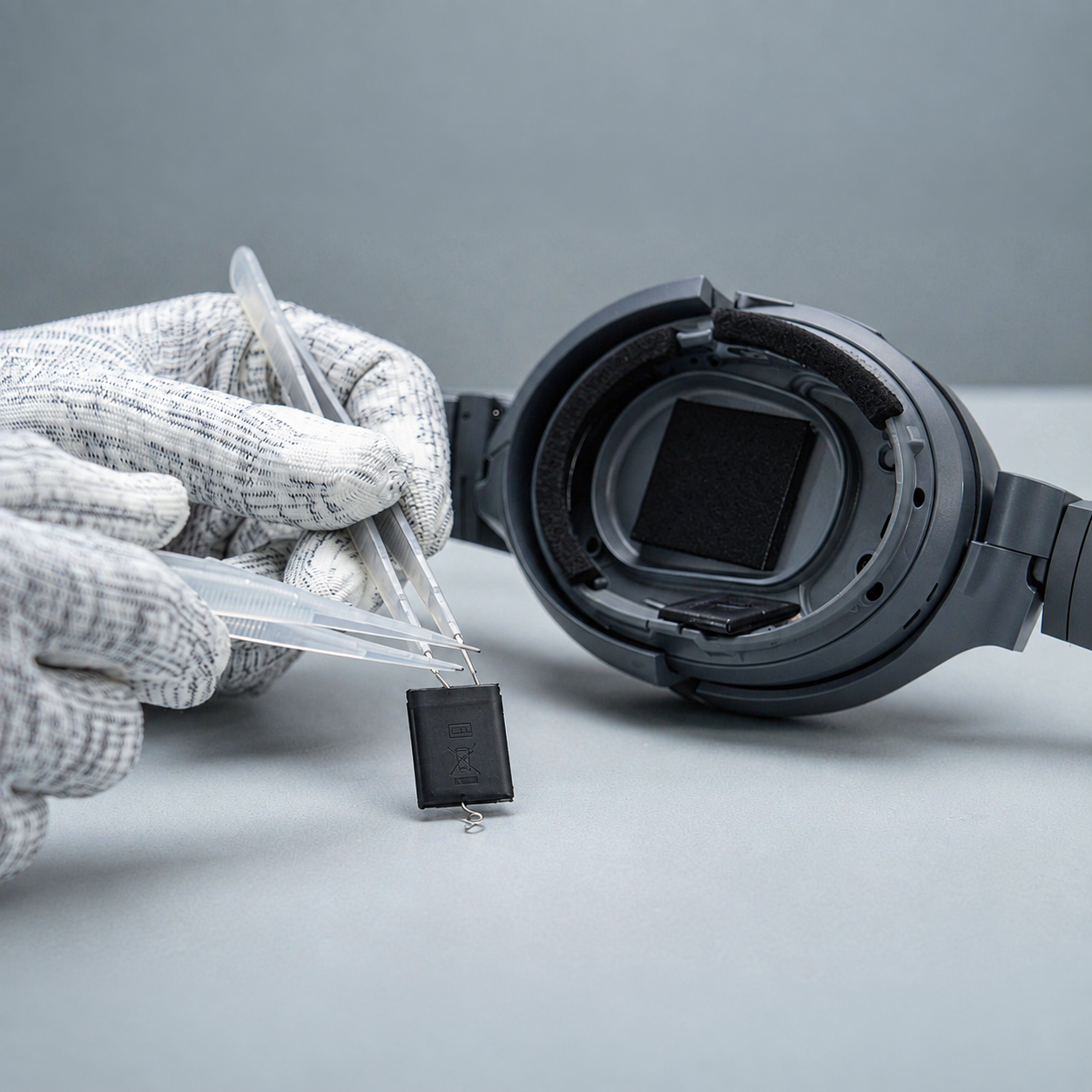
The easiest way to boost runtime is to use a larger battery cell. But over-ear headphones have limited space inside the earcups, and true wireless earbuds have even smaller charging cases. Add more capacity, and size and weight go up — while wear comfort goes down. Runtime, weight and comfort are on the same seesaw: adjust one, and you have to recalibrate the other two.
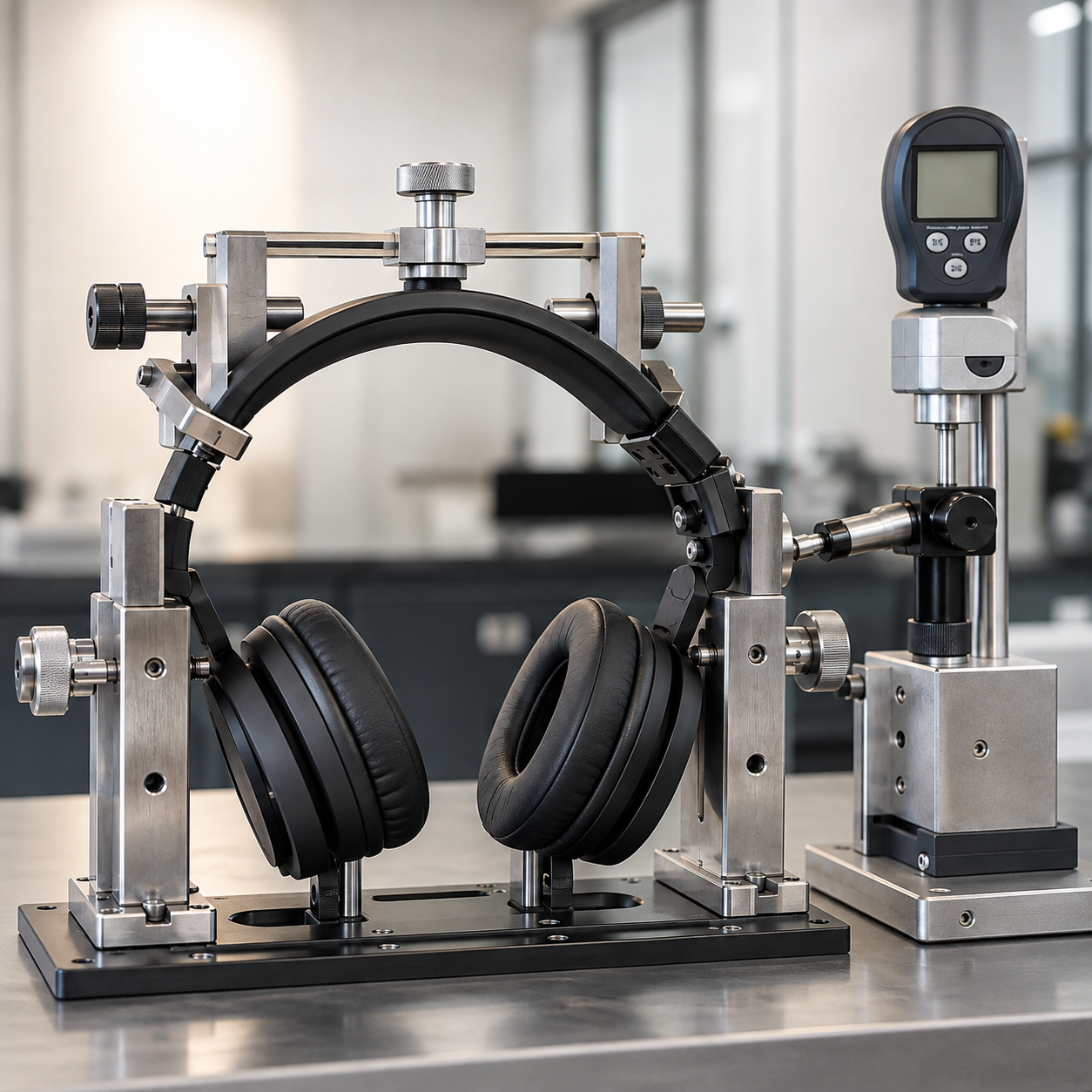
So when setting targets, don’t just ask the factory if they can hit the number — ask what it means for total weight, earcup depth, and clamping force on the head. Have them present two options: one built to max out the runtime target, and one that balances runtime and weight. Then pick based on your product positioning. For a fitness-focused model, the lighter option is almost always the right call.
Manage Marketing Claims Upfront
The number on your engineering spec sheet is not the same as the number on the retail box. The first is engineering language, tied to test conditions. The second is marketing language, and it has to hold up to real customer use. The gap between the two is where bad reviews come from.
When you print runtime on packaging and e-commerce listings, use the same conditions you validated in engineering. Don’t let marketing inflate the number on their own. If your typical test condition is medium volume with ANC off, don’t use a low-volume, idle-like test just to hit a bigger number. Retailers and customers won’t read your fine-print test conditions — they’ll just compare their real-world experience to your advertised number.
Hold Factories to Your Test Conditions
Once you’ve worked through all that, the final step is to hand the full set of conditions to your factory. Clearly state in your spec sheet the volume level, ANC state, audio source and temperature that correspond to each runtime figure. Require factories to validate samples under those exact same conditions, and confirm line by line when they sign off. Bring these conditions into the quoting stage, and runtime numbers from different factories will actually be comparable.
If a factory tries to quietly switch conditions — for example, quoting ANC-off numbers for an ANC-on requirement — you’ll catch it right away. The more granular your spec definition, the less room there is for disputes later on.
Key Takeaways
Most battery life disputes are seeded on kickoff day. Hand a factory a number with no conditions attached, and you’ll get a product built on no real basis. Derive your targets from usage scenarios, split them into condition-specific metrics, balance them against weight and comfort, align marketing claims with engineering conditions, and get factories to sign off on your exact test setup — that’s how you build runtime specs that actually hold up. For OEM or ODM projects, bring this framework into your very first discussion with factories, and sampling and mass production will go much smoother.