Leave Your Message

Top 10 Headphone Suppliers in China for Global Buyers?

For global buyers, choosing among China’s Head Phones suppliers requires more than a polished catalog. Factory location, production capacity, acoustic tuning, and communication quality can shape the final result. Shenzhen and Dongguan are major electronics manufacturing hubs, but a supplier’s address alone proves little. Details matter.

Audio researcher Sean Olive, known for research on headphone sound quality, has emphasized: “Frequency response is the most important factor in headphone sound quality.” That principle offers a useful starting point. Buyers should listen to samples, compare tuning, and check whether product specifications match measured performance. Samples can surprise.

This guide introduces ten Chinese suppliers for international buyers to investigate. It considers product range, OEM and ODM capabilities, customization, quality-control practices, and export experience. These are practical screening points, not a guarantee of performance or a definitive ranking. Supplier information can change, and public claims may not tell the whole story. Ask for current certifications, production details, sample terms, and clear lead-time estimates before making a decision. A factory visit or independent inspection may also reveal gaps that a video call cannot. No shortlist replaces careful verification. That is not enough. The best fit depends on your target market, budget, and sound requirements—and even a thorough review can miss something.
Top 10 Headphone Suppliers in China for Global Buyers?

China’s Role in the Global Headphone Supply Chain

China’s Role in the Global Headphone Supply Chain

China’s influence reaches beyond final assembly. The World Bank’s World Development Indicators put China’s share of global manufacturing value added at roughly 30% in 2022. That industrial depth supports dense networks for tooling, plastics, cables, packaging, and product testing. UN Comtrade’s HS 851830 trade data also identifies China as a major exporter of headphones and earphones. But shipment figures do not reveal where every component was made.

The market remains substantial. Fortune Business Insights estimated the global headphone market at USD 17.92 billion in 2023 and projected it to reach USD 45.08 billion by 2032. For buyers, this demand makes production capacity useful, but not sufficient. Ask suppliers how they control driver matching, microphone tuning, mesh placement, and final acoustic checks. Small details matter.

The picture is not perfectly transparent. A factory may assemble products locally while sourcing chips, batteries, or drivers elsewhere. Export data cannot settle that question. Buyers should verify component origins, production lead times, quality records, and how defects are handled after shipment. A factory visit or independent inspection can help test claims; neither guarantees consistent results.
China’s Role in the Global Headphone Supply Chain

Manufacturing value added as a share of the world total, 2022

China’s large manufacturing base provides important industrial context for global headphone sourcing. These figures represent economy-wide manufacturing, not headphone production or supplier market share. Values are rounded. Source: World Bank, Manufacturing value added (current US$); shares calculated against the world total.

Key Criteria for Evaluating Chinese Headphone Suppliers

Top 10 Headphone Suppliers in China for Global Buyers?

Key Criteria for Evaluating Chinese Headphone Suppliers

Choosing a supplier takes more than comparing quoted prices. Check whether its production capabilities match your product, order volume, and delivery schedule. Ask for clear specifications on drivers, battery performance, microphone quality, and materials. A polished sample can sound impressive, but request several units from a production batch to check consistency. Small differences matter.

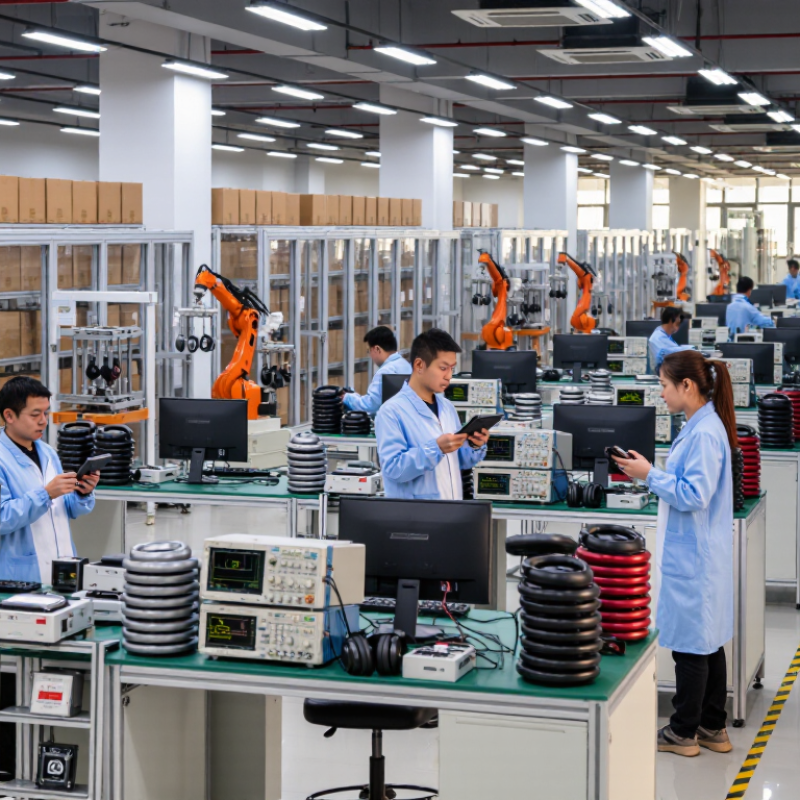
Review the supplier’s quality-control process, including incoming material checks, assembly inspections, and final audio tests. Ask how it handles defects and replacement parts. Verify relevant certificates and test reports directly, and confirm they apply to the exact product model. Discuss packaging, shipping terms, and lead times in writing. A spreadsheet cannot reveal every production habit, so a factory visit or independent inspection may help. Even then, no process is flawless.

Tips: Send the same written checklist to each candidate. Compare sample measurements, not just listening impressions. Keep one approved sample as a reference before production starts. If an answer feels vague, ask again; clear communication is part of supplier evaluation.

Top 10 Headphone Suppliers in China for Global Buyers? – Key Criteria for Evaluating Chinese Headphone Suppliers

Supplier-neutral evaluation matrix. These criteria and suggested weights are a practical buyer scorecard, not a ranking or verified assessment of any specific supplier. Score each shortlisted supplier against the same evidence requirements.

Evaluation Criterion What to Evaluate Evidence to Request or Verify Suggested Weight
Product and engineering capability Experience with the required headphone type, acoustic design, electronics, fit, and intended use. Relevant product samples, technical specifications, development process, and examples of comparable projects. 15%
Sound quality and sample consistency Whether samples meet the buyer’s agreed sound, microphone, comfort, and performance requirements. Approved reference sample, test criteria, measurement records where applicable, and a documented sample-approval process. 13%
Quality management and production controls How incoming materials, production steps, finished goods, and nonconforming products are controlled. Quality procedures, inspection records, corrective-action examples, and current ISO 9001 certificate details if claimed. 13%
Product compliance for destination markets Ability to identify and meet requirements applicable to the product and the buyer’s sales markets. Model-specific test reports and declarations as applicable; verify report scope, product identity, issuing laboratory, and current market requirements. 12%
Materials and component traceability Control of key components and materials, including batteries, wireless modules, drivers, and plastics. Bill of materials, approved-vendor controls, component specifications, and traceability records for production lots. 10%
Capacity and delivery performance Production capacity, lead-time assumptions, peak-season planning, and ability to meet agreed shipment schedules. Capacity plan, production schedule, lead-time breakdown, and shipment-performance records for comparable orders. 10%
Customization and tooling Support for packaging, colors, materials, firmware or app requirements, and custom tooling where needed. Written scope, tooling ownership terms, sample and revision stages, engineering-change controls, and associated charges. 8%
Cost transparency and commercial terms Clarity of unit pricing, minimum order quantities, tooling fees, payment terms, and price-adjustment conditions. Itemized quotation, Incoterms® rule and named place, quote validity, payment schedule, and written terms for changes. 7%
Packaging, shipping, and after-sales support Export-packaging suitability, handling of shipping documents, warranty process, and response to field issues. Packaging specifications, sample shipping documents, warranty terms, spare-parts policy, and escalation process. 6%
Communication and supplier transparency Responsiveness, clarity of technical communication, and willingness to support audits and verification. Named project contacts, timely written responses, factory or process audit access, and consistent documentation. 6%
Total suggested evaluation weight 100%

Profiles of Ten Headphone Suppliers in China

China’s headphone supply base includes factories with very different strengths. One profile is a large-scale maker focused on wired models and stable repeat orders. Another specializes in Bluetooth products, where buyers should check battery testing and connection consistency. A third offers gaming headsets with detachable microphones. A fourth develops lightweight models for travel. Details matter.

Other profiles include a supplier of children’s headphones with adjustable headbands; a maker of noise-reducing designs; a factory producing custom-fit earphones; a small-batch workshop for new product trials; an exporter coordinating packaging and shipping; and a component-focused supplier providing drivers, cables, or ear cushions.

These are useful categories, not verified company rankings.

Ask each candidate for current product specifications, sample lead times, quality-control records, and production capacity. Check whether the sample matches the written specification, including weight, cable length, and microphone performance. A neat catalog is not enough. Factory capabilities can change, and claims may need independent confirmation. Even a promising supplier can miss a detail. A video call, sample inspection, and clear acceptance checklist help buyers compare offers on evidence rather than price alone.

Comparing Supplier Capabilities, Products, and Markets

China’s headphone suppliers differ less by catalog size than by engineering depth, order flexibility, and export experience. The same wireless earbud shell can hide major differences in acoustic tuning, battery validation, and app integration. Details matter. Fortune Business Insights valued the global headphone market at USD 34.8 billion in 2023 and projects a 6.3% compound annual growth rate through 2032 in its Headphone Market report. This growth makes supplier capability more important than a low quotation alone.

Large OEM and ODM factories may offer automated assembly, acoustic testing, tooling support, and higher production capacity. Smaller specialists may handle custom colors, packaging, and pilot runs faster, though their testing resources can be limited.

Ask for frequency-response plots, battery-cycle records, and defect rates from recent production lots. Samples alone mislead. Compare a pilot batch with the approved sample under the same listening and charging conditions.

Product mix also reveals market fit. Over-ear models require comfortable ear cushions and durable hinges; true wireless models depend on secure case fit, clear microphones, and stable connections. Export buyers should check whether suppliers can adapt documentation, labels, and packaging for destination markets. Do not assume a supplier serving several regions has equally mature quality systems. Compare factory audits, warranty handling, and engineering change control—not just unit prices.

How Global Buyers Can Choose a Suitable Supplier

Choosing a headphone supplier means checking more than unit price and a polished sample. Ask for recent production records, component traceability, and documented tests for battery life, connection stability, microphone clarity, and repeated folding. Ask to see evidence. Bluetooth SIG’s 2023 Market Update projected 1.3 billion annual shipments of Bluetooth audio-streaming devices by 2027. That scale makes production capacity worth checking, but a forecast is not proof of quality. Compare quotations line by line, including tooling, packaging, sample fees, and replacement-part availability. Small omissions can become costly later.

Request a pilot order and inspect units from different cartons, not just hand-picked samples. Check whether the supplier can explain how it handles defects, changing components, and delivery delays. The Global E-waste Monitor 2024 reports that 62 million tonnes of e-waste were generated in 2022, while only 22.3% was documented as formally collected and recycled. Ask about battery serviceability, material declarations, and repair options; request records rather than accepting broad promises. A supplier may answer slowly at first. That is not automatically a deal-breaker, but vague answers deserve a second look. Compare two or three suppliers using the same checklist, and record what remains uncertain.