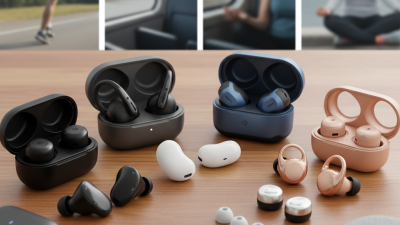
China’s headphone industry combines large-scale production with a growing focus on acoustic design, wireless connectivity, and noise cancellation. The global market is expanding, but buyers still face a practical question: which manufacturers can deliver consistent sound, comfortable fit, and dependable quality at scale?
Grand View Research estimated the global headphones market at USD 71.5 billion in 2023, with projected growth through 2030. This broader market figure includes many product types and regions; it should not be mistaken for China-specific sales. Counterpoint Research’s regular hearables tracking also reflects how quickly wireless listening products are changing. Together, these sources provide useful context for comparing Chinese manufacturers, though rankings depend on criteria such as product focus, export reach, and manufacturing capability.
Specifications tell only part of the story. A driver-size figure cannot reveal how a headphone feels after a long commute, or whether its tuning suits different listeners. Dr. Sean Olive, a leading researcher in headphone acoustics, has emphasized the importance of listener preference in evaluating sound quality. A concise paraphrase of his research is: “Judge sound by listener preference, not specifications alone.” That distinction matters.
This overview examines ten Chinese manufacturers through their product expertise, market presence, and areas of specialization. It also recognizes a limitation: public company data can be uneven, and brand visibility does not always prove factory capability. For buyers sourcing Head Phones, careful comparison remains essential.
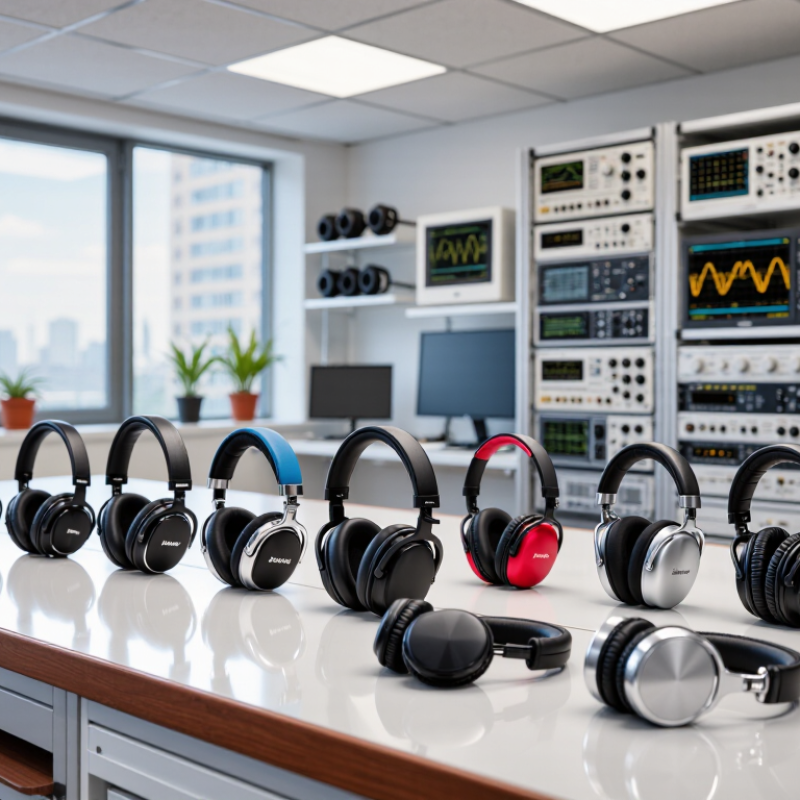
China’s headphone manufacturing industry has moved beyond basic assembly toward integrated product development. Leading factories now combine acoustic tuning, battery engineering, tooling, and software testing. Shenzhen, Dongguan, and nearby production clusters support dense supplier networks. A small workshop can source drivers, hinges, cables, packaging, and testing fixtures within days. This short distance reduces delays, but it can also encourage rushed decisions. Quality varies more than many buyers expect.
The strongest manufacturers operate controlled production lines with incoming-material inspection and traceable batch records. Engineers test frequency response, microphone clarity, charging safety, sweat resistance, and hinge durability. Human listening remains important. Automated graphs cannot fully describe comfort after four hours of use. Experienced teams adjust ear-pad pressure, headband tension, and enclosure vents through repeated samples. Still, some product claims rely on limited testing, especially for battery life and noise reduction. Buyers should request laboratory methods, not only attractive numbers.
China’s development is increasingly shaped by export compliance, recycled materials, and shorter product cycles. Factories are investing in digital work instructions, robotic assembly, and energy monitoring. These tools improve consistency, although they do not replace skilled inspection. The next challenge is balancing low cost with repairability and stable long-term support. Manufacturing data can reveal defects earlier, but only when workers record problems honestly. That sounds simple. It is not.
Top 10 Headphone Manufacturers in China
Ranking China’s leading headphone manufacturers requires more than counting factory output. IDC reported 520.1 million wearable devices shipped worldwide in 2023. Hearables formed one of the largest categories. This demand makes production scale important, but scale alone can hide quality problems. Our ranking should examine annual capacity, export experience, delivery stability, and defect rates. Public financial records, audited factory information, and verified customer feedback can improve reliability.
Technical capability carries equal weight. We assess acoustic testing, Bluetooth performance, microphone clarity, battery safety, and noise-control consistency. Patent activity and engineering staff also indicate genuine research strength. TÜV, SGS, and Intertek testing records can support claims about safety and durability. Manufacturers with ISO 9001 systems deserve stronger consideration. However, certification dates and testing scopes must be checked carefully.
Commercial service completes the picture. We compare warranty policies, spare-part availability, customization support, and response times for overseas buyers. Data from Canalys and Counterpoint Research shows strong competition in wireless audio markets, where pricing changes quickly. Therefore, financial stability and supply-chain resilience matter. A supplier may offer an impressive sample but fail during a large order. That risk deserves a clear penalty. No public dataset is complete. Some manufacturers disclose little information, so expert interviews and factory visits remain valuable. My ranking may still overlook smaller, technically capable producers.
| Ranking Priority | Evaluation Criterion | Weight | Objective Measurement Method | Relevant Technical or Commercial Evidence | Maximum Score |
|---|---|---|---|---|---|
| 1 | Product Safety and Regulatory Compliance | 20% | Review applicable conformity documents and laboratory test reports for target markets. | Examples include CE requirements for the European Economic Area, FCC requirements for the United States, RoHS substance restrictions, REACH obligations, and UN 38.3 testing for lithium-battery transport where applicable. | 20 |
| 2 | Manufacturing Capacity and Delivery Reliability | 15% | Assess verified production lines, monthly capacity, production lead time, on-time delivery rate, and business-continuity arrangements. | Evidence may include factory audit records, production schedules, capacity declarations supported by records, and historical order-fulfillment data. | 15 |
| 3 | Audio Engineering and Acoustic Performance | 15% | Compare frequency response, distortion, sensitivity, impedance, channel balance, microphone performance, and active-noise-cancellation results using controlled test procedures. | Measurements should be supported by calibrated equipment, repeatable test conditions, and reports aligned with recognized audio measurement practices. | 15 |
| 4 | Quality Management System | 10% | Evaluate documented quality controls covering incoming materials, process inspection, final inspection, traceability, corrective action, and defect management. | ISO 9001 certification can support the assessment, but certification scope, validity, and actual factory implementation should also be verified. | 10 |
| 5 | Research, Development, and Engineering Capability | 10% | Assess in-house capability for acoustic tuning, electronics, firmware, Bluetooth integration, mechanical design, tooling, and engineering validation. | Relevant evidence includes engineering staff, testing facilities, design records, patent or utility-model activity, and the ability to complete documented product-development stages. | 10 |
| 6 | Supply-Chain Control and Component Traceability | 8% | Review supplier qualification, incoming inspection, approved-vendor controls, component traceability, and risk management for batteries, drivers, chipsets, and plastics. | Strong evidence includes supplier-audit procedures, lot tracking, material declarations, and documented controls for counterfeit or nonconforming components. | 8 |
| 7 | Customization and OEM/ODM Service Capability | 7% | Measure the ability to provide industrial design, acoustic customization, packaging, firmware changes, tooling, private labeling, and engineering samples. | Assessment should be based on documented development workflows, sample approval procedures, tooling management, minimum order requirements, and change-control records. | 7 |
| 8 | After-Sales Support and Warranty Management | 5% | Evaluate warranty terms, return-material authorization procedures, repair or replacement capability, response time, spare-parts availability, and technical support. | Reliable evidence includes written warranty policies, service-level commitments, ticket-resolution records, and regional support arrangements. | 5 |
| 9 | Environmental and Social Responsibility | 5% | Review environmental management, restricted-substance control, waste handling, energy practices, workplace safety, and labor-compliance procedures. | Supporting evidence may include ISO 14001 certification, supplier codes of conduct, environmental declarations, audit reports, and compliance with applicable product regulations. | 5 |
| 10 | Commercial Transparency and Total Cost of Ownership | 5% | Compare quotation clarity, tooling and certification costs, payment terms, minimum order quantities, packaging costs, logistics requirements, and expected failure-related costs. | Use written quotations, contractual terms, sample invoices, cost breakdowns, and clearly defined warranty and replacement conditions. | 5 |
| Recommended Ranking Model | 100% | Rank manufacturers by the weighted score after document verification, factory or third-party audits, sample testing, and reference checks. A company should not be ranked solely on price, online visibility, or unverified production claims. | 100 | ||
Profiles of the Top 10 Headphone Manufacturers in China
A useful comparison of ten Chinese headphone manufacturers looks beyond factory size. One specializes in wireless earbuds, while another focuses on over-ear models with padded cups and replaceable cables. A third develops acoustic components; a fourth handles assembly for overseas buyers. Others compete through low-cost wired products, gaming headsets, noise reduction, compact charging cases, or custom production runs. The remaining manufacturers may stand out for in-house tooling or strict product testing. These are different business strengths, not proof of a definitive ranking.
Grand View Research estimated the global headphones market at about US$64.6 billion in 2023 and forecast 5.6% annual growth from 2024 to 2030. That market context makes production consistency important. Buyers should compare sample sound, hinge durability, microphone clarity, battery performance, and packaging—not just quoted unit prices. Ask how each maker checks channel balance and tests repeated folding. Small details matter. A glossy sample can hide uneven assembly. Supplier profiles should also clarify which processes happen in-house and which are subcontracted. This distinction is easy to miss, and it can complicate quality control. A comparison based on verified samples and documented test methods is more useful than broad claims about capacity.
China’s annual exports of headphones and earphones (HS 851830), in US$ billions. This aggregate trade indicator provides industry context; it does not rank or identify individual manufacturers.
Loading annual trade data from UN Comtrade…
Source: UN Comtrade public API, reporter China, exports to world, HS 851830.
China’s top ten headphone manufacturers cover over-ear, in-ear, wireless, gaming, studio, and hearing-protection products. A reliable ranking should examine factory capability, not only export volume. Many manufacturers support private-label development, custom acoustic tuning, and flexible order quantities. Their engineering teams often test driver sensitivity, battery endurance, microphone clarity, and Bluetooth stability. Sample evaluation remains essential. Product catalogues can look impressive, yet real performance may vary between models.
Manufacturing strengths usually include automated assembly, injection molding, metal machining, and in-house packaging. Larger facilities may operate acoustic chambers, aging-test rooms, and environmental testing equipment. These resources help control sound consistency and reduce production defects. Advanced models may include active noise cancellation, low-latency wireless transmission, spatial audio, and beamforming microphones. Still, technology is not everything. Some factories have excellent hardware but weaker software support or inconsistent quality control. That detail deserves careful review.
Tips: Request samples from different production batches. Check hinge strength, ear-pad recovery, charging temperature, and microphone performance in a noisy room. Ask for test reports, material specifications, and production lead times. Confirm whether tooling, firmware, and after-sales support are handled internally. No factory is perfect. A thoughtful buyer should record both strengths and weaknesses before placing a larger order.
China’s top headphone manufacturers vary widely in engineering depth, production scale, and export experience. Some focus on affordable wireless models, while others provide advanced acoustic tuning, active noise control, or professional monitoring products. Global buyers should compare factory audits, quality systems, battery testing, and warranty support instead of judging suppliers by price alone. A low quotation can hide weaker microphones, unstable hinges, or inconsistent assembly.
Request samples from several manufacturers. Test them in offices, public transport, and quiet rooms. Check Bluetooth stability, charging time, microphone clarity, comfort after two hours, and packaging strength. Ask for recent production records and clear defect-rate data. Reliable suppliers usually explain their testing process without vague promises. However, even experienced buyers can overlook regional plug requirements or app compatibility. That mistake is costly.
Tips: Build a scorecard before contacting factories. Include unit cost, minimum order quantity, lead time, customization, certifications, and after-sales response time. Compare identical specifications, not attractive but incomplete quotations. Request a pilot order before committing to large volumes. Inspect random units during production when practical. Also, leave room for improvement; first samples rarely represent the final market experience perfectly. Listen carefully.