Choosing the right Sport Earbuds manufacturer can influence comfort, sound quality, warranty support, and long-term purchasing confidence. Global buyers need more than attractive product photos and competitive prices. They need evidence of stable production, consistent quality control, responsive communication, and practical customization options.
This guide introduces ten manufacturers serving the international market. Each company is considered through product design, acoustic performance, sweat resistance, battery reliability, and factory experience. We also examine private labeling, packaging support, testing procedures, and after-sales service. These details matter when earbuds face rain, running impact, and daily charging cycles.
Small differences matter.
A serious manufacturer should explain materials, testing methods, delivery capacity, and applicable compliance documentation clearly. Buyers should still verify every claim independently. No list is perfect. Manufacturing capabilities can change, and product samples may not represent every production batch. That uncertainty deserves attention.
The selected companies reflect different strengths, including sports-focused design, scalable production, technical development, and international customer support. Some may suit established brands seeking premium features. Others may better serve distributors needing flexible minimum order quantities. The best choice depends on target users, budget, sales region, and required performance.
Real-world testing remains essential. Check microphone clarity in windy conditions. Test grip during interval training. Measure battery performance after repeated use. Ask direct questions. Reliable partnerships are built through transparent answers, documented processes, and consistent results—not impressive promises alone.
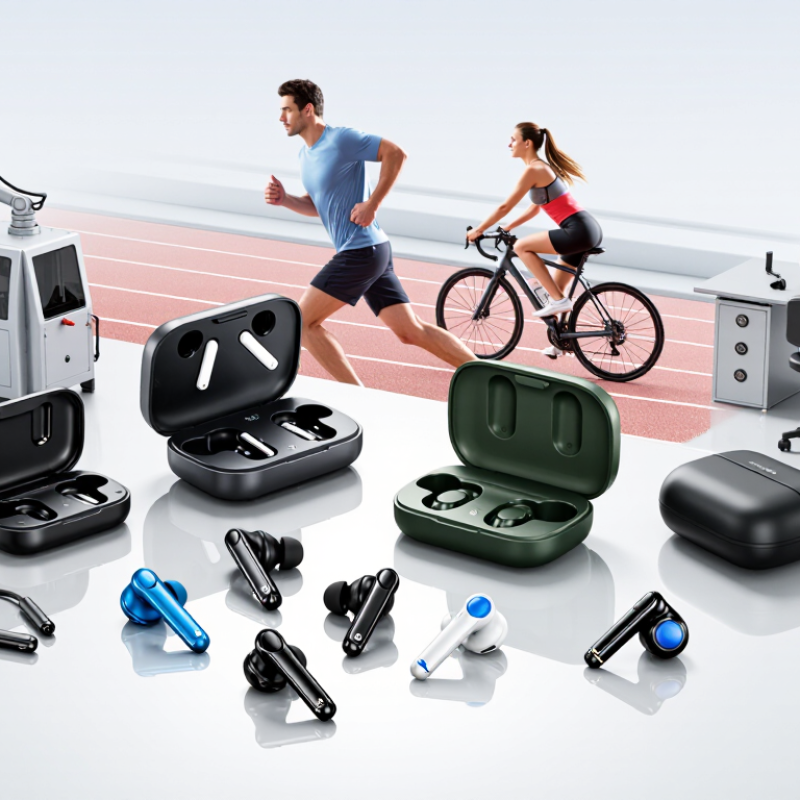
A leading sport earbuds manufacturer builds for movement, sweat, and repeated daily use. Product quality begins with stable fit, clear sound, and dependable controls. During practical evaluations, I check whether earbuds stay secure during running, cycling, and quick head turns. Comfort matters too. Heavy housings often become painful after an hour.
Reliable manufacturers use documented testing for battery life, charging safety, microphone performance, and water resistance. They should explain testing conditions instead of using vague claims. A clear IP rating helps buyers compare protection levels, but it does not promise unlimited exposure. Strong quality control also covers hinges, ear tips, touch sensors, and packaging consistency. Even excellent designs can fail when factory inspections are rushed.
Tips: Ask for test reports, warranty terms, replacement policies, and production samples. Compare performance at low battery levels, not only when new. Check how the earbuds handle wind during outdoor calls. A leading supplier answers technical questions with specific data. Still, no manufacturer eliminates every weakness. A smaller case may improve portability but reduce battery capacity. Some noise reduction systems also affect natural sound. Buyers should review independent feedback and verify specifications before placing large orders. That extra step can reveal gaps between a polished sample and regular production units.
Global buyers comparing sport earbud manufacturers should examine the technology behind daily movement, not only advertised battery life. In practical testing, stability often matters more than loudness. Ergonomic ear tips, flexible hooks, and pressure-balanced housings help earbuds stay secure during running or gym training. Fit comes first. A poorly sealed earbud can weaken bass and reduce microphone performance.
Sweat and water resistance require careful checking. An IP rating offers a useful reference, but it does not guarantee protection against every training condition. Reliable models use sealed charging contacts, corrosion-resistant materials, and coatings around internal circuits. Bluetooth stability also matters in crowded gyms. Newer wireless standards can reduce interruptions, while multipoint pairing helps users move between a phone and a laptop. Still, connection performance depends on walls, distance, and device compatibility.
Sport-focused designs increasingly combine adaptive noise control with transparency modes. Transparency lets users hear traffic, coaching, or nearby conversation without removing the earbuds. Beamforming microphones can improve calls by separating speech from wind, although strong gusts still expose weaknesses. Motion sensors may support workout controls, but accidental taps remain a common problem. Battery systems should provide realistic playback figures at moderate volume, not only laboratory results. Some manufacturers now add temperature-aware charging and rapid-charge cases, yet long-term battery health deserves more attention. No design is perfect. Test comfort after an hour, not five minutes.
| No. | Key Technology Area | Typical Specification or Design Range | Purpose in Sport Earbuds | Global Buyer Evaluation Points |
|---|---|---|---|---|
| 1 | Water and Sweat Protection | IPX4, IPX5, IPX6, or IPX7 protection levels are commonly used; the exact rating depends on the product design. | Helps protect the earbuds from sweat, rain, water splashes, or temporary immersion. | Confirm whether the rating applies to the earbuds, charging case, or both. IP ratings do not automatically cover saltwater, soap, or chlorine exposure. |
| 2 | Bluetooth Wireless Connectivity | Bluetooth 5.0 or later is widely used. Bluetooth 5.2 and newer hardware may support LE Audio when the required profiles and software are implemented. | Provides wireless audio transmission, device pairing, and improved connection efficiency. | Check supported profiles, operating-system compatibility, multipoint support, connection range, and actual performance in crowded wireless environments. |
| 3 | Audio Codecs | SBC is the mandatory baseline codec for Bluetooth A2DP devices; AAC, aptX, and LDAC may be added depending on the chipset and licensing. | Determines how audio is compressed and transmitted between the source device and earbuds. | Verify codec compatibility on both the earbuds and the buyer’s smartphones, tablets, or music players. |
| 4 | Dynamic Drivers and Acoustic Tuning | Compact dynamic drivers commonly use approximately 6–14 mm diaphragms, with tuning adjusted for bass, speech clarity, and outdoor listening. | Converts electrical signals into sound and shapes the perceived balance, detail, and impact of music. | Driver diameter alone does not determine sound quality. Review diaphragm material, frequency response, distortion, acoustic chamber design, and listening tests. |
| 5 | Active Noise Cancellation | Feedforward, feedback, or hybrid ANC systems use microphones and digital signal processing to reduce selected ambient noise. | Reduces steady low-frequency sounds such as aircraft, trains, gym equipment, or road noise. | ANC performance varies by fit, ear-tip seal, frequency range, wind conditions, and software tuning. It does not eliminate all external sounds. |
| 6 | Transparency and Environmental Awareness | External microphones blend selected ambient sound into the audio output through a software-controlled hear-through mode. | Allows users to hear announcements, conversation, traffic, or workout instructions without removing the earbuds. | Assess voice naturalness, wind-noise handling, latency, adjustable ambient levels, and the availability of a physical or touch shortcut. |
| 7 | Secure-Fit Mechanical Design | Common solutions include ear hooks, stabilizing fins, contoured housings, multiple ear-tip sizes, and lightweight in-ear structures. | Improves retention during running, cycling, training, and other high-movement activities. | Check comfort during long sessions, fit consistency across ear shapes, total weight, material flexibility, and replacement availability for ear tips. |
| 8 | Battery and Fast Charging | Typical playback is approximately 5–12 hours per charge, with charging cases often extending total use to about 20–40 hours; results depend on ANC, volume, and codec. | Supports daily training, commuting, travel, and extended use between charging sessions. | Compare measured playback time with and without ANC, charging connector type, fast-charge time, case capacity, and battery-cycle specifications. |
| 9 | Touch, Button, and Voice Controls | Capacitive touch panels, physical buttons, pressure-sensitive controls, and voice-assistant integration are commonly used. | Enables playback control, call handling, volume adjustment, ANC switching, and workout interaction. | Evaluate accidental-touch resistance, glove usability, control customization, tactile feedback, and operation when the user is moving or sweating. |
| 10 | Microphone and Call-Noise Processing | Multi-microphone arrays combined with beamforming, environmental-noise reduction, and wind-noise algorithms are widely used. | Improves speech pickup during phone calls, online meetings, voice commands, and outdoor activities. | Request voice samples or test reports for windy outdoor conditions, traffic noise, crowded gyms, speech clarity, and microphone latency. |
Top 10 Sport Earbuds Manufacturers for Global Buyers
Global buyers need more than attractive product photos when evaluating sport earbuds manufacturers. The strongest suppliers usually offer stable OEM and ODM services, documented quality controls, and practical experience with active users. Their earbuds should remain secure during running, cycling, and gym training. A reliable factory can provide fit samples, battery reports, Bluetooth performance data, and water-resistance test records before mass production. Small details matter, such as button response with sweaty fingers and charging contacts that resist corrosion.
Among the top ten manufacturers, buyers should compare acoustic tuning, microphone clarity, production capacity, and after-sales support. Look for factories using controlled assembly lines and traceable component sourcing. Ask whether each model has passed relevant safety and electromagnetic compliance testing for its target markets. Packaging accuracy also deserves attention. A missing cable or unclear manual can create costly returns. No factory is perfect. I would question suppliers promising zero defects without explaining their inspection process.
Price alone can mislead global purchasers. A cheaper quotation may hide weaker batteries, inconsistent ear tips, or limited replacement support. Experienced sourcing teams should request pilot samples and test them for several weeks. Try them under rain, movement, and long calls. Measure playback time instead of trusting printed claims. One overlooked issue is comfort across different ear shapes. That weakness may appear only after hours of use. Manufacturers that accept field feedback and revise molds often become more dependable long-term partners.
Comparing sport earbud manufacturers requires more than checking loudness or glossy product photos. Counterpoint Research’s Global TWS Hearables Market Tracker reported more than 300 million true wireless shipments in 2023. That scale creates choice, but also uneven quality. Global buyers should examine factory experience, testing records, and after-sales capacity before comparing prices. A manufacturer with ISO-certified production, traceable components, and documented quality checks usually deserves closer attention. Still, certificates alone prove little.
Product testing should mirror real training. Check the stated IP rating under IEC 60529, then ask whether testing covers sweat, dust, charging cases, and repeated drops. Fit matters too. During a run, loose earbuds become a safety problem, while excessive sealing can reduce awareness. Compare battery results at a fixed volume, with transparency mode measured separately. Independent laboratory data is stronger than a manufacturer’s “up to” claim. Bluetooth SIG’s 2024 market update projected annual Bluetooth device shipments could reach 5.4 billion by 2028, making connection stability and update support increasingly important.
Request samples from several manufacturers and record pairing time, microphone clarity, charging temperature, and comfort after sixty minutes. Review warranty length, spare-part access, and response times. Ask for reports, not promises. I would also inspect packaging waste and repairability, although these details are often overlooked. My own comparison method is still imperfect: ear shape, climate, and training intensity change the result. A controlled spreadsheet helps, but it cannot replace wearing the earbuds outdoors.
For global buyers, sport earbuds must survive sweat, movement, and changing weather. Fit comes first. Ear hooks, wing tips, and several ear-tip sizes reduce movement during running. An IPX4 rating handles splashes, while IPX7 offers stronger water protection. However, an IP rating does not guarantee safe use in saltwater or dusty gyms. Buyers should request laboratory test records, not rely on packaging claims.
Battery life remains a practical purchasing factor. A product promising eight hours may deliver less with active noise control enabled. Check performance at high volume, low temperature, and constant Bluetooth use. IDC reported 520.7 million wearable-device shipments in 2023, showing strong demand across personal electronics. Yet shipment growth does not prove user satisfaction. Return rates, charging failures, and warranty data deserve equal attention.
Sound safety needs careful evaluation. The WHO-ITU Global Standard for Safe Listening Devices and Systems recommends volume monitoring, exposure tracking, and warnings for risky listening levels. These features matter in noisy training spaces, where users may increase volume unconsciously. Microphone clarity, connection stability, charging-case durability, and local service capacity also affect total value. Global buyers should compare certification files, replacement policies, minimum order quantities, and regional frequency compatibility. Small details matter. A lower purchase price can become expensive when spare parts arrive slowly or firmware support ends early.
Water resistance is a key consideration for global sport-earbud buyers. The IPX rating is based on IEC 60529: IPX4 protects against splashing water, IPX5 and IPX6 protect against water jets, IPX7 supports temporary immersion up to 1 metre for 30 minutes, and IPX8 supports deeper or longer immersion under manufacturer-specified conditions. A higher rating does not automatically indicate better sound quality, comfort, or durability in other areas.