10 Best Sport Earbuds for Running in 2026
Running can be wonderfully simple: lace up, step outside, and find a steady rhythm. The equipment matters most when it gets in the way. Sport Earbuds should stay secure through sharp turns, handle sweat, and keep music or navigation clear without demanding constant adjustment. A loose fit on a quiet training run is annoying; on a busy road, it can become a distraction.
There is good reason to choose running headphones carefully. Strava’s 2024 Year in Sport report recorded a 59% increase in running-club participation worldwide, reflecting renewed interest in shared, outdoor training. The World Health Organization recommends that adults complete at least 150 minutes of moderate-intensity physical activity each week. Those figures do not prove that earbuds make people run more. They do show why comfortable, dependable gear matters to many active people.
Small details count. A fin that presses against the ear after three miles, a case that opens awkwardly at the gym, or controls that fail with damp fingers can spoil an otherwise good run. Battery life and water resistance matter, too, but manufacturers’ ratings do not always capture real-world comfort. That deserves a little skepticism. This 2026 guide compares ten sport-focused options by fit, stability, sound, controls, durability, and value, while recognizing that ears differ and no single model suits everyone. The best choice is the pair you can wear comfortably, hear safely, and forget about once your pace settles.
How Running Earbuds Differ from Everyday Wireless Earbuds
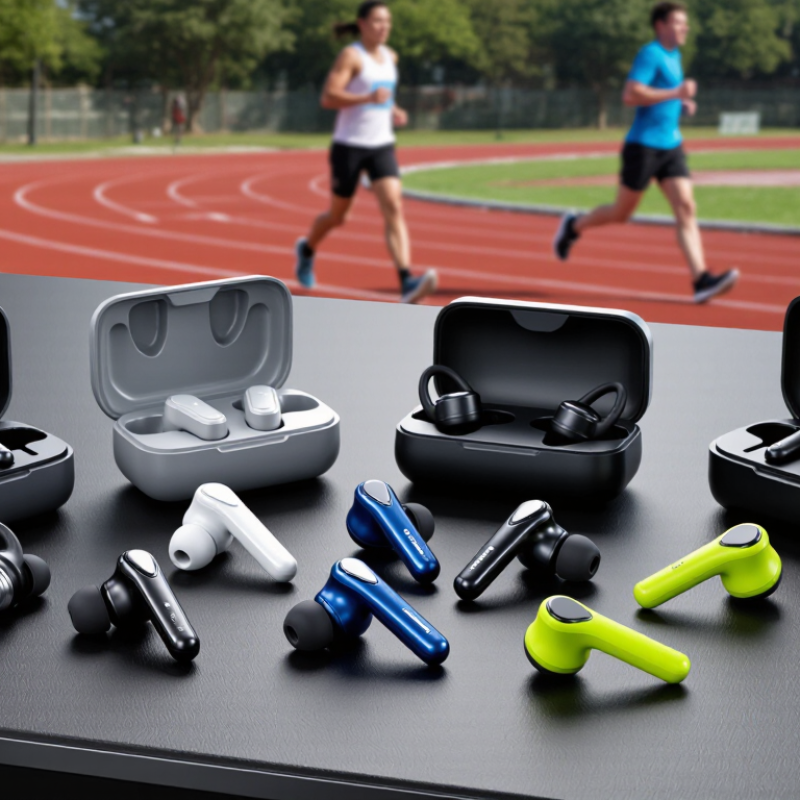
Running earbuds have a harder job than everyday wireless earbuds. They must stay secure through repeated foot strikes, handle sweat, and remain usable with cold or damp fingers. A loose fit becomes obvious within minutes. Everyday models may prioritize calls and desk comfort instead. For runners, try the fit while jogging in place; a seal that feels tight on the couch can loosen once your pace changes.
Water resistance matters, but ratings need careful reading. An IP rating describes tested protection against dust or water, not guaranteed survival after years of sweat exposure. Check the exact rating and care instructions, then wipe the earbuds dry after use. Awareness matters, too: open designs or a low-volume setting can help runners hear traffic and other people. Noise cancellation may be useful indoors, but it can mask important sounds outdoors.
The market context is growing: Grand View Research estimated the global wireless headphones market at about $75 billion in 2023, with continued growth projected through 2030. That figure covers many kinds of headphones, not running-specific models, so it cannot tell us which features runners need most. In practice, fit and controls deserve as much attention as battery life. I would not assume a high price means a safer or more stable run; ear shape and route conditions complicate the choice.
The 10 Best Sport Earbuds for Running in 2026
The 10 Best Sport Earbuds for Running in 2026 should stay secure through turns, sweat, and uneven pavement. A useful shortlist covers different runners, not just the loudest or most expensive models. Look for a stable fit, clear controls, and enough battery life for your usual route. Small details matter. A button you can find with damp fingers may be more practical than a touch surface that reacts to rain.
Among the strongest choices are lightweight open-ear designs for runners who want to hear nearby traffic, and snug in-ear models for quieter paths. Some options prioritize a soft ear hook; others use several tip sizes to reduce slipping. Models with adjustable awareness modes can help balance music and outdoor sounds. For long training sessions, favor dependable battery life and a case that fits easily in a pocket. A strong water-resistance rating is useful, but it does not make earbuds indestructible.
Comfort is personal, so try a pair on a short jog before relying on it for a race. Listen at a moderate volume and check whether the fit stays steady when you look over your shoulder. Reviews can reveal recurring problems, but one runner’s perfect seal may irritate another’s ears. I would not rank sound quality alone above fit; that is an easy mistake. The best pick is the one you can wear consistently without adjusting every few minutes.
How the Top Running Earbuds Compare in Fit and Performance
Fit and performance separate useful running earbuds from merely impressive ones. A secure fit should survive quick turns, downhill steps, and damp skin without constant readjustment. Yet ear shapes vary, so no single tip design works for everyone. Comfort matters over distance. A tight seal may improve bass and reduce slipping, but it can also feel intrusive after several miles. For road running, compare how clearly you hear nearby traffic, not just how powerful the sound seems.
The American College of Sports Medicine’s 2024 fitness-trends survey ranked wearable technology first, drawing on responses from 3,885 health and fitness professionals. That reflects growing interest in connected training, but it does not prove that earbuds improve performance. Treat battery life, control reliability, and call quality as practical features, not promises of faster times. Sweat resistance also needs careful reading: an IPX4 rating indicates resistance to splashing water, not protection against submersion. Real-world fit remains personal. I still find that a comfortable pair can shift once sweat builds up.
Tips: Test earbuds on a short jog before a long run. Try the smallest tip that seals without pressure, then check whether you can hear approaching cyclists. Keep volume moderate. If one side loosens repeatedly, adjust the fit rather than tightening both sides until they ache.
How to Use and Care for Running Earbuds Safely
Running earbuds should stay secure without sealing you off from your surroundings. Before a run, check that each tip feels snug and does not cause pressure or pain. Start with a low volume, especially near roads or shared paths. You should still hear nearby voices, wheels, and warning sounds. Keep one ear free if your route feels busy or unfamiliar. Not perfect, perhaps, but safer than relying on sound alone. Look up regularly and pause your audio when crossing.
After running, wipe the earbuds with a soft, dry cloth. Sweat can collect around the tips and charging contacts, so remove detachable tips and clean them according to the care instructions. Let every part dry fully before placing it in its case. Never push a sharp object into a speaker opening. If sound becomes muffled, inspect for visible debris rather than scraping at it. Small habits help.
Check the fit and cable or casing for cracks before longer sessions. Stop using them if they become unusually hot, smell odd, or irritate your skin. Store them away from direct sun and damp gym bags. Charge them with compatible equipment, and keep the case dry. I sometimes forget the case after a run; that is exactly when grit seems to find its way inside. A quick inspection beats discovering a problem halfway through tomorrow’s route.
Safe Listening Time for Running Earbuds
WHO safe-listening guidance estimates up to 40 hours per week at 80 dB. For every 3 dB increase, the recommended listening time is halved.
These are general exposure estimates, not a personal safety guarantee. Earbud volume readings can vary by device and fit. Keep the volume moderate and take listening breaks.