China Top 10 Wireless Gaming Headphones Suppliers
China has become a major sourcing hub for wireless gaming audio products. This guide introduces ten suppliers serving international brands, distributors, and gaming retailers. It focuses on manufacturing capability, product consistency, communication, and after-sales support.
The review examines Gaming Headphones Wireless models through practical criteria. These include wireless latency, Bluetooth and 2.4 GHz connectivity, microphone clarity, battery endurance, and wearing comfort. Physical details also matter. A flexible headband, soft ear cushions, stable hinges, and clearly labeled controls can influence daily use. Supplier evaluations should also consider factory experience, quality-control procedures, customization options, minimum order quantities, and export documentation. Certifications must be verified for the target market, rather than assumed from a product listing.
No supplier fits every purchasing project. A factory with strong acoustic performance may offer limited packaging design. Another may provide fast samples but weaker communication after payment. That difference matters. Product claims should be checked through samples, test reports, video inspections, and independent quality audits whenever possible. Prices can change with chip availability, exchange rates, materials, and order volume. Therefore, this overview should support supplier comparison, not replace direct due diligence. Some information may require reassessment as catalogs and production lines change. The most dependable choice is usually the supplier that combines clear evidence, stable production, honest communication, and responsive service.
Wireless Gaming Headphones: Definition and Core Features
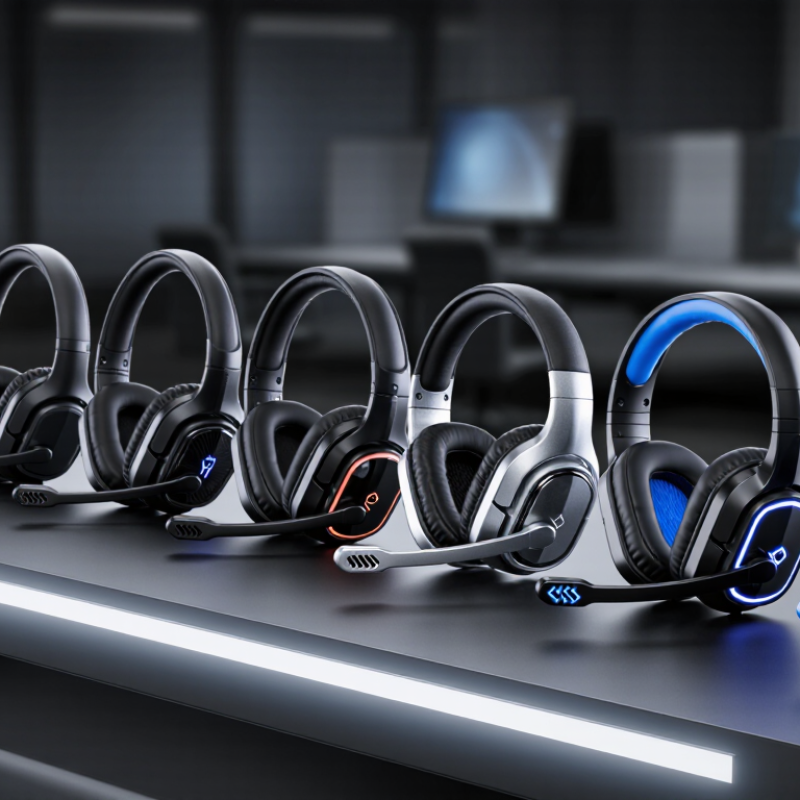
Wireless gaming headphones are audio devices designed for untethered play, voice communication, and real-time sound awareness. They usually connect through a low-latency wireless receiver or Bluetooth. The receiver often delivers faster response than standard Bluetooth. This matters when a delayed footstep changes a competitive match.
Core features include low latency, stable connection, directional audio, and a sensitive microphone. A practical headset should separate nearby sounds clearly, such as footsteps, reloads, and distant movement. Balanced tuning is more useful than excessive bass. Strong bass can hide small details. Battery life also deserves careful testing. A headset claiming long endurance may perform differently with high-volume use and microphone monitoring enabled.
Comfort is not decoration. Lightweight construction, breathable ear cushions, and adjustable clamping pressure affect long sessions. Good suppliers should provide measurable specifications, compatibility information, safety documentation, and consistent quality checks. Testing samples across different devices is wise. A product may work well on one console but lose microphone functions elsewhere. That assumption fails.
No headset is perfect. Wireless signals can face interference, and batteries eventually lose capacity. Suppliers that explain these limits appear more reliable than those promising flawless performance. Buyers should inspect warranty terms, replacement parts, charging behavior, and after-sales response. These details often reveal manufacturing discipline better than polished product photos.
China’s Wireless Gaming Headphone Manufacturing Landscape
China Top 10 Wireless Gaming Headphones Suppliers
China’s Wireless Gaming Headphone Manufacturing Landscape
China’s wireless gaming headphone sector combines large-scale assembly with specialized acoustic engineering. The top ten supplier groups usually serve different market levels, from entry products to custom professional equipment. Their factories often cluster around electronics manufacturing regions with strong component networks.
A typical production line includes circuit board placement, speaker matching, battery installation, firmware testing, and final acoustic inspection. Engineers measure latency, microphone clarity, wireless stability, and battery performance. Small details matter. A loose hinge can damage user confidence quickly. Many suppliers now support Bluetooth, dedicated 2.4GHz connections, USB audio, and multi-device switching.
Experienced buyers should inspect more than product samples. Ask for battery safety documents, radio testing records, quality-control procedures, and traceable production batches. A reliable supplier should explain its failure-rate targets and corrective actions clearly. Factory audits can reveal soldering defects, weak packaging, or inconsistent ear-pad materials. These issues are easy to miss during a short video call.
Customization is another major feature of China’s manufacturing landscape. Suppliers may adjust headband pressure, microphone position, control layouts, lighting, firmware, and packaging. However, faster customization does not always mean better engineering. Some factories promise too much before confirming tooling limits. That deserves careful questioning. Actual reliability should guide the decision, not only a polished sample or a low quotation.
Top 10 Chinese Wireless Gaming Headphone Suppliers
China’s wireless gaming headphone suppliers support OEM and ODM projects for global buyers. Many offer acoustic tuning, wireless modules, microphone design, and packaging support. Experienced suppliers can adjust earcup pressure, battery capacity, and control placement for different users.
A reliable supplier should provide clear test records, production samples, and traceable quality checks. Ask about 2.4GHz latency, Bluetooth stability, charging protection, microphone noise control, and wireless range. Inspect hinge strength and ear-pad materials, because small defects often appear after repeated use. Factory visits or independent audits can reveal differences between samples and mass production. No supplier is perfect. That matters.
Tips:
Request two sample rounds before approval. Test audio delay during fast gameplay. Check the headset after several charging cycles. Compare the supplier’s written claims with measured results, not attractive photographs. Keep every specification in a signed document.
Price alone can mislead buyers. A lower quotation may exclude software tuning, replacement parts, or final inspection. Discuss minimum order quantities, lead times, warranty handling, and firmware updates early. Suppliers with structured engineering teams usually explain limitations more clearly. Still, communication can become slow across time zones, and assumptions create avoidable mistakes. A practical evaluation should balance sound quality, durability, compliance documentation, and long-term service.
Supplier Comparison: Quality, Technology, Pricing, and Services
China Top 10 Wireless Gaming Headphones Suppliers
Comparing ten suppliers requires more than checking product photos and quoted prices. Quality should be verified through microphone tests, latency measurements, battery checks, and hinge-cycle inspections. A reliable supplier provides sample units, material specifications, and consistent production records. Small details matter, such as stable earcup joints and clear voice pickup in noisy rooms.
Technology separates similar-looking products. Check 2.4GHz wireless performance, Bluetooth compatibility, codec support, connection range, and software control. Pricing should include tooling, packaging, shipping, replacement parts, and quality inspections. The cheapest quotation can become expensive after revisions. Service also deserves careful review. Evaluate response speed, sample changes, warranty handling, production updates, and communication after payment. I sometimes overvalue a polished factory presentation. That is a mistake.
Tips: Request two samples from different batches. Test them for several days. Record latency, charging time, comfort, and microphone clarity. Ask for a written defect policy and production timeline. Compare total ownership cost, not only unit price. A supplier may offer advanced features but lack dependable after-sales support. Another may provide excellent service while using older wireless hardware. This trade-off should be documented before negotiation. Supplier scorecards help, though they are never perfect. Human judgment still matters.
How to Choose a Reliable Wireless Gaming Headphone Supplier
Choosing a reliable wireless gaming headphone supplier requires more than comparing quoted prices. Request production samples and test them for latency, wireless range, microphone clarity, comfort, and battery performance. Test the sample. A stable connection should survive movement between rooms without sudden audio cuts. Check whether the microphone preserves speech in a noisy office, not only in a quiet showroom.
Ask for detailed specifications, material information, quality-control procedures, and relevant safety documentation. Ask for records. A dependable supplier should explain its testing process, not hide behind attractive product photos. Review battery-cycle results, charging protection, ear-cup durability, and software compatibility. Small details matter. For example, loose hinges, stiff buttons, or weak charging ports often appear after repeated daily use. Supplier audits, factory videos, and traceable inspection reports can reveal whether quality is consistent across different production batches.
Communication also shows operational maturity. Notice how quickly the supplier answers technical questions and handles a sample defect. Clear drawings, realistic lead times, packaging tests, and written warranty terms reduce costly misunderstandings. However, no supplier is perfect. A polished sample may not represent mass production, and promised delivery dates can still slip. Use an independent inspection before shipment, especially for large orders. Compare at least three suppliers using the same testing checklist, while recording failures instead of relying on optimistic impressions. A low price is useful only when performance remains dependable.