Leave Your Message
Choosing the best Wireless Bluetooth Headset is not simply a search for the loudest model. It is a practical decision involving comfort, sound quality, battery life, microphone performance, and connection stability. A headset that sounds impressive in a quiet store may disappoint beside a busy road. Small details matter. Ear pressure, button placement, wind noise, and charging speed can shape daily satisfaction.
John C. Koss, founder of Koss Corporation, once said, “The most important thing about headphones is that they sound good.” His statement remains useful, but it is not the whole answer. Modern buyers also need to examine Bluetooth version, supported codecs, multipoint pairing, call quality, and water resistance. A commuter may value strong noise cancellation. A remote worker may prefer a clear microphone and reliable computer switching. A gamer may notice audio delay immediately.
Real testing is essential.
This guide will compare the features that influence real-world use, not just packaging claims. We will consider how the headset feels after two hours, whether voices remain natural during calls, and whether the connection survives movement between rooms. Battery figures also need caution. Manufacturer ratings often depend on controlled settings. High volume, active noise cancellation, and frequent calls can reduce them. That is easy to overlook.
There is no perfect Wireless Bluetooth Headset for everyone. Personal hearing, device compatibility, budget, and daily habits change the result. A careful choice may take longer. It can also prevent an expensive mistake.
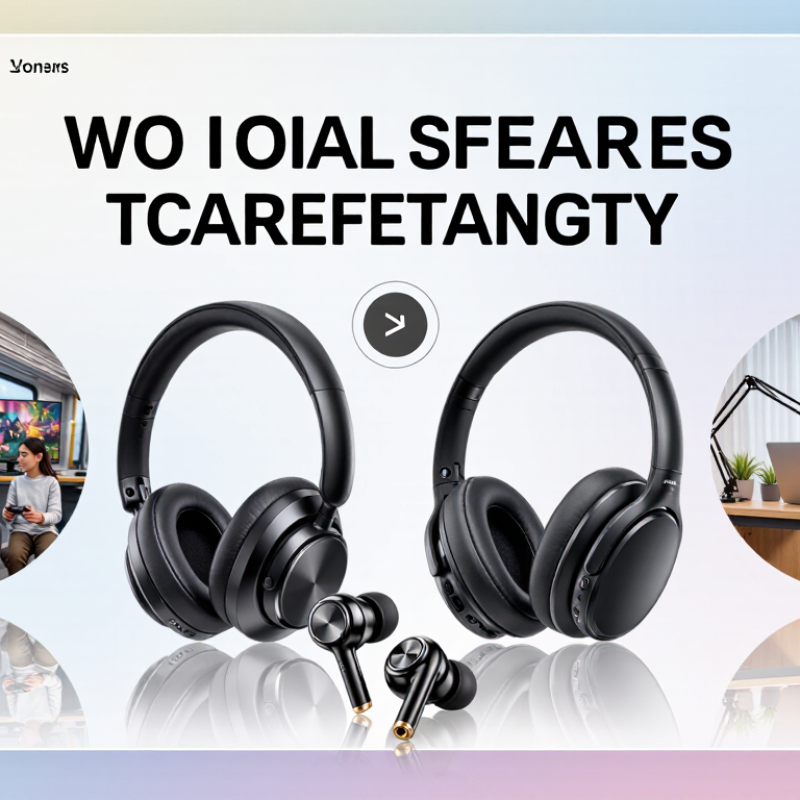
When choosing a wireless Bluetooth headset, begin with your main task, not the feature list. A commuter needs clear speech over train noise and steady comfort for long rides. A remote worker may value microphone quality more than powerful bass. For exercise, a secure fit matters because small movement can loosen the headset. Write down your usual situation before comparing specifications.
Your listening environment changes the right choice. In a quiet office, strong noise reduction may feel unnecessary or create a faint pressure sensation. On a busy street, effective noise control can make voices easier to hear at safer volume levels. Wind can damage call quality, even when music sounds excellent indoors. Test the headset near traffic, if possible. Also check how its controls respond with cold or gloved fingers.
Battery claims should be considered carefully. Playback time often changes with volume, calls, and noise-control settings. Comfort also needs a real test, not a quick shop fitting. Wear the headset for at least twenty minutes. Notice heat, ear pressure, and whether glasses affect the seal. I once focused too much on sound detail and ignored clamp pressure; that choice became tiring by afternoon. A better decision may involve one compromise. Perfect performance in every environment is unlikely.
| Main Use Case | Typical Listening Environment | Top Priority | Recommended Features | Useful Battery Target | Noise-Control Guidance | Key Trade-Off to Consider |
|---|---|---|---|---|---|---|
| Office calls and remote meetings | Quiet office, shared workspace, or home office | Clear two-way speech | Directional microphone, microphone noise reduction, comfortable ear cushions, stable Bluetooth connection, and convenient mute control | At least 15–20 hours of talk or listening time | Passive isolation is usually sufficient in a quiet room; ANC can help with nearby conversations or air-conditioning noise | Strong microphone processing may make the headset sound less natural for music |
| Commuting by train or bus | Continuous low-frequency engine and road noise with occasional announcements | Noise reduction and comfort | Effective ANC, a secure fit, transparency or ambient mode, physical controls, and a carrying case | At least 25–35 hours with ANC enabled | Choose ANC for steady rumble; retain an ambient mode for announcements and traffic awareness | Maximum ANC performance can increase price, weight, and battery consumption |
| Air travel | Aircraft cabin with sustained low-frequency noise and long listening sessions | Long-session comfort | Strong low-frequency ANC, comfortable clamping force, wired audio fallback, foldable design, and long battery life | At least 30 hours, preferably with a quick-charge function | ANC is especially useful for engine noise; an ambient mode is useful when speaking with cabin crew | Large over-ear models may be more comfortable but less compact for travel |
| Music listening at home | Quiet room with limited background noise | Sound quality and comfort | Well-tuned drivers, low distortion, adjustable equalizer, stable connection, and comfortable ear pads | At least 20–30 hours | ANC is optional; passive isolation or an open-feeling design may provide a more natural experience | Open or lightly isolated designs can leak sound and are less suitable near other people |
| Walking and outdoor use | Sidewalks, parks, and mixed urban surroundings | Awareness and secure fit | Transparency mode, stable in-ear or on-ear fit, sweat resistance, simple controls, and reliable call performance | At least 8–12 hours for earbuds or 20 hours for a headset | Use ambient mode near roads; avoid fully blocking environmental sounds in traffic areas | Maximum isolation may reduce awareness of vehicles, cyclists, and pedestrians |
| Exercise and gym training | Movement, perspiration, music, and intermittent gym noise | Fit and durability | Secure ear tips or stabilizers, sweat resistance, easy-to-clean surfaces, physical controls, and a compact charging case | At least 6–10 hours per charge for earbuds | Moderate isolation is often preferable; use awareness mode outdoors and around gym equipment | Water resistance does not always mean protection against submersion; check the stated rating and care instructions |
| Gaming and voice chat | Indoor room with game audio, keyboard noise, and online teammates | Low delay and microphone quality | Low-latency mode, clear boom or beamforming microphone, comfortable headband, sidetone, and device compatibility | At least 15–25 hours for wireless sessions | Passive isolation can reduce distractions; ANC is less important than low delay and clear voice pickup | Some low-latency modes may reduce range, battery life, or compatibility with certain devices |
| Watching films and television | Living room or bedroom, usually at moderate volume | Audio-video synchronization | Low-latency support, stable connection, comfortable ear cushions, adjustable volume, and multipoint or transmitter compatibility when needed | At least 20 hours | Passive isolation is normally adequate; ANC can be helpful in a shared or noisy room | Bluetooth latency may vary by device, application, and codec, so compatibility should be checked before purchase |
| Frequent calls in noisy locations | Cafés, busy offices, streets, or public transport platforms | Microphone noise rejection | Multiple microphones, strong voice-isolation processing, wind-noise reduction, sidetone, and a reliable mute function | At least 15–25 hours of talk time | ANC helps the wearer hear the caller; microphone noise reduction determines how well the other person hears the wearer | Noise processing can introduce artifacts, especially in heavy wind or rapidly changing noise |
| Shared room or library study | Quiet environment where sound leakage may disturb others | Low sound leakage | Closed-back construction, secure seal, comfortable low-pressure fit, adjustable volume, and quiet-touch controls | At least 20 hours | Passive isolation or moderate ANC can reduce the need for high listening volume | A tighter seal may improve isolation but can cause warmth or discomfort during long sessions |