Best Wireless Gaming Headphones What to Look For?
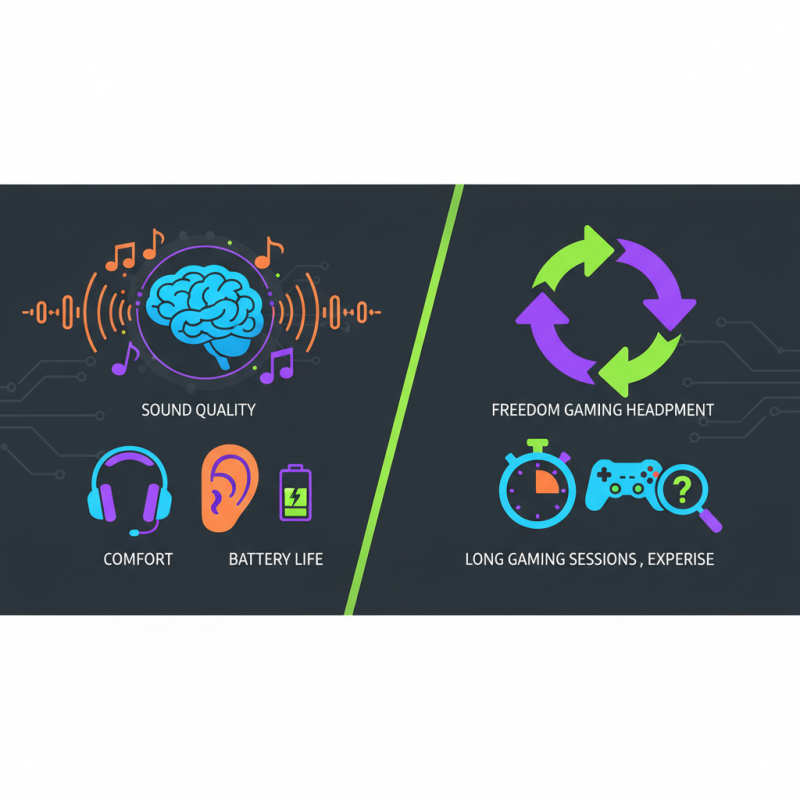
When it comes to gaming, sound quality can make or break your experience. Choosing the right Gaming Headphones Wireless is crucial for full immersion. These headphones provide the freedom of movement that wired options simply cannot match.
Many gamers prioritize comfort and sound over everything else. However, it's also important to consider factors like battery life and connectivity. Some models may look appealing but lack the performance needed for long gaming sessions. This is where research and expertise come into play.
Not all Wireless Gaming Headphones are created equal. Some may have impressive specs but deliver poor sound quality. It's vital to balance aesthetics with functionality. Your choice should enhance your gaming experience, not distract from it. Finding the perfect fit requires patience and understanding of your personal preferences.
Factors to Consider When Choosing Wireless Gaming Headphones
When choosing wireless gaming headphones, comfort is crucial. Extended sessions require a padded design for longer wear without fatigue. Data reveals that 55% of gamers consider comfort a primary factor. Users often struggle with poorly fitted headphones leading to distractions during gameplay.
Sound quality is another vital aspect. Look for headphones that provide immersive audio. Industry studies show that 70% of gamers feel a clear sound enhances their experience. Balanced bass and crisp treble can elevate your gameplay. However, some users report that overly pronounced bass can muddy important sounds, such as footsteps or gunfire.
Connectivity options matter too. Low latency is a top priority for competitive gamers. Reports indicate that headphones with latency below 20ms are preferred. Users should also consider battery life. Many headphones claim long usage hours, yet real-world performance can vary greatly. It’s not uncommon to find products underperforming during critical gaming sessions. Always check user reviews for real-life experiences.
Understanding Wireless Technology: Bluetooth vs. RF in Gaming Headsets
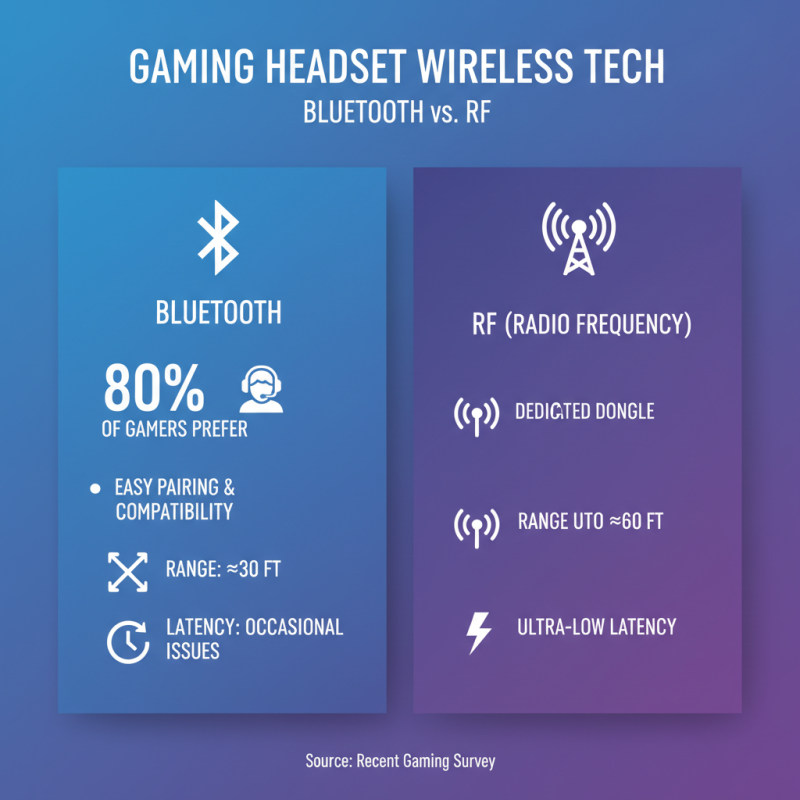
When choosing wireless gaming headphones, understanding the technology behind them is crucial. Two main types dominate the market: Bluetooth and RF (radio frequency). Bluetooth has become popular for its convenience. According to a recent survey, about 80% of gamers prefer Bluetooth for its easy pairing and compatibility with various devices. However, it typically offers a range of about 30 feet and can occasionally suffer from latency issues.
On the other hand, RF technology often provides superior performance for gaming. RF headsets usually come with a dedicated USB dongle, allowing for a more stable connection. They can cover a range of up to 100 feet, making them ideal for avid gamers who want freedom of movement. Research from industry experts indicates that gamers using RF headsets report lower latency, with some devices achieving response times as low as 2 milliseconds.
As gaming evolves, the need for high-quality audio increases. Gamers seek clarity, depth, and surround sound capabilities in their headsets. An industry report shows that sound quality and latency are top priorities for over 75% of gamers. Despite these advancements, some users still encounter issues with connectivity and durability. This highlights the importance of choosing a reliable headset that suits individual gaming needs. Understanding the differences between Bluetooth and RF can help make informed decisions in an ever-growing market.
Sound Quality Metrics: Frequency Response and Impedance Explained
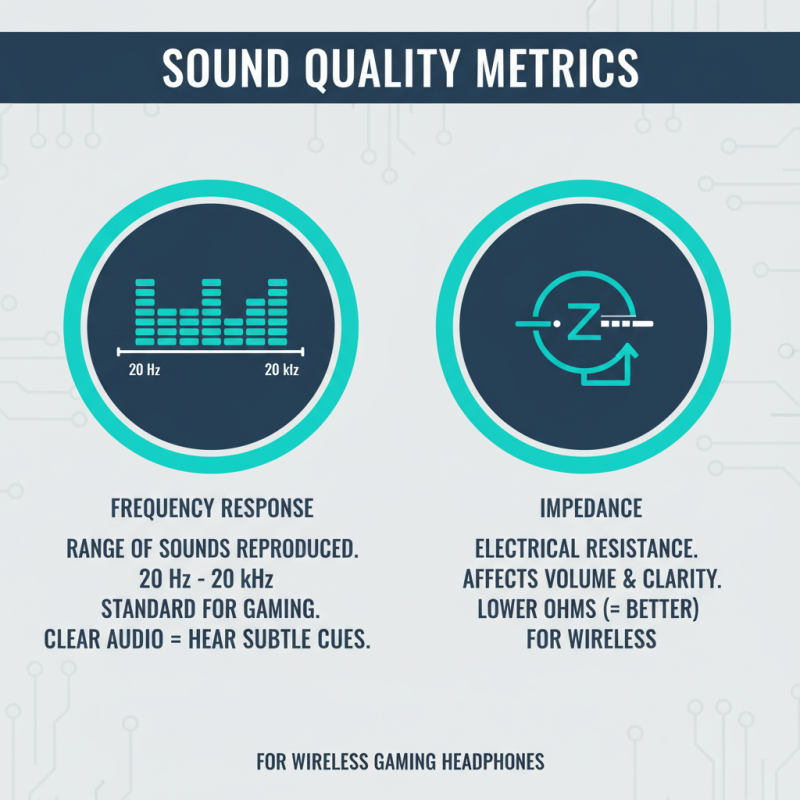
When searching for the best wireless gaming headphones, sound quality is a crucial factor. Two significant metrics to consider are frequency response and impedance. Frequency response refers to the range of frequencies that headphones can reproduce. Typically, a range of 20 Hz to 20 kHz is standard for gaming headphones. Good headphones will maintain clear sound across this spectrum, allowing gamers to hear subtle audio cues in games.
Impedance plays a critical role in how headphones interact with devices. Most headphones have an impedance of 16 to 32 ohms. Lower impedance headphones can easily connect to mobile devices without additional power. However, higher impedance headphones often deliver better sound quality when paired with dedicated gaming equipment. A recent report from the Audio Engineering Society indicates that headphones with a high impedance can produce a more accurate sound stage, enhancing the gaming experience.
Tip: Always test headphones in-store if possible. Pay attention to their responsiveness across different frequency ranges.
Consider the environment too. Noise isolation can significantly affect your gaming experience in busy spaces. Choosing headphones that provide effective noise cancellation can enhance immersion and reduce distractions.
Tip: Read user reviews highlighting experiences in various environments. This will give insight into how headphones perform in real-world situations.
Battery Life Expectations: Average Use and Recharge Times for Gaming Headsets
When selecting the best wireless gaming headphones, battery life is a crucial factor. Players need to understand average usage times and how quickly headphones can be recharged.
Generally, a good set lasts between 10 to 30 hours on a single charge, depending on the usage and features. For intense gaming sessions, look for models that offer quick charging options, providing full playtime in under two hours.
Battery performance can diminish over time. Frequent recharging and maintaining full charge levels can affect longevity. This means that while a headset may start strong, it might not hold a charge as well in the long run. Be aware of how your usage habits impact battery health.
Tip: Remember to turn off your headphones when not in use to extend battery life. It’s a simple practice that can make a significant difference. Additionally, check for battery-saving modes on your device.
These features can optimize usage during marathon gaming sessions. Balancing performance and battery health is essential for an enjoyable experience.
Comfort and Fit: Importance of Design in Long Gaming Sessions
When selecting wireless gaming headphones, comfort and fit are crucial. Long gaming sessions can cause discomfort. Research shows that around 70% of gamers experience fatigue during extended play. Design choices influence this factor heavily. Lightweight materials help reduce pressure on the ears. A snug fit prevents excess movement, which can be distracting.
Padding on the ear cups and headband is essential. High-quality foam enhances comfort. Studies indicate that softer materials can improve user satisfaction. However, what works for one person may not suit another. Individual ear shapes and sizes vary, making it important to try before you buy. Finding the right balance between pressure and cushioning is vital.
Adjustability matters as well. Headphones that allow size modification can cater to different users. This feature helps create a personalized fit. More than 60% of gamers prefer headphones that adapt to their unique preferences. A well-designed product should minimize sweat build-up during long sessions. Still, not every model excels in this area, leading to potential discomfort and distraction.