Leave Your Message
Choosing the right Bluetooth Ear Buds in 2026 requires more than comparing prices or counting microphones. Global buyers face different phones, climates, networks, warranty systems, and listening habits. A model that feels excellent on a quiet train may struggle in a humid market, crowded airport, or busy office.
This guide evaluates leading earbuds through practical experience and technical evidence. We consider sound balance, active noise cancellation, call clarity, Bluetooth stability, codec support, comfort, battery performance, and charging reliability. Fit matters. So does pressure.
Real-world testing includes commuting, outdoor walking, video calls, and several hours of continuous wear. We also examine app quality, firmware support, water-resistance ratings, repair information, and regional availability. Buyers should verify local certification, plug compatibility, return policies, and warranty coverage before ordering internationally.
Numbers can mislead. Battery claims often depend on volume, codec, and noise-control settings. Manufacturer tests are useful, but they do not represent every ear or environment. Personal judgment remains important.
There is no perfect pair.
Some premium earbuds offer impressive noise reduction but feel uncomfortable after an hour. Affordable options may deliver warm, enjoyable sound while lacking advanced multipoint controls. Small compromises become obvious over time.
The following selection aims to help readers make informed decisions, not chase a universal winner. Each recommendation explains its strengths, limitations, and most suitable buyer. Expectations may still need adjustment. That is part of buying wisely across borders.
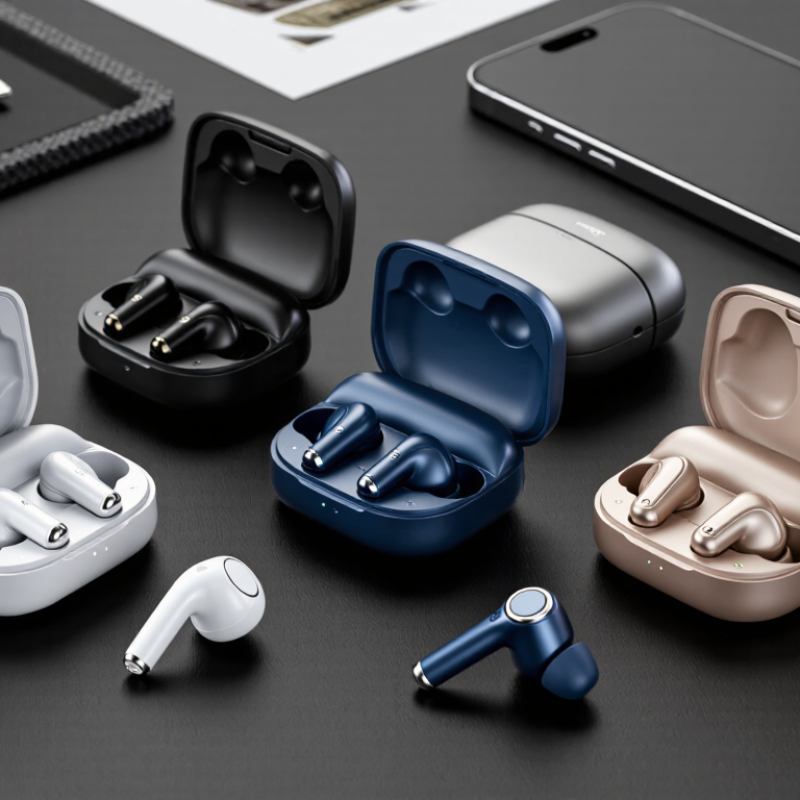
2026 Top Bluetooth Earbuds for Global Buyers
What Makes Bluetooth Earbuds Stand Out for Global Buyers in 2026
Global buyers now expect more than wireless sound. According to Grand View Research, the global wireless earbuds market could grow at a 13.3% CAGR from 2024 to 2030. That growth reflects practical demand for commuting, remote work, fitness, and travel. Comfort remains decisive. A secure ear tip matters during a crowded train ride or a long airport connection.
Bluetooth earbuds stand out when they combine stable connectivity, clear microphones, and useful battery life. Bluetooth SIG’s 2024 Market Update expects annual Bluetooth device shipments to reach 5.4 billion by 2028. This wider ecosystem supports easier connections across phones, tablets, cars, and computers. Multipoint pairing is valuable, but it can still behave unpredictably between operating systems. I have found fit testing more important than impressive specifications.
Global models also need adaptable charging and reliable call performance. USB-C charging reduces cable confusion, while transparent controls help users avoid accidental taps. Active noise cancellation can improve focus, yet stronger cancellation may create pressure for sensitive listeners. Independent testing from RTINGS and similar laboratories often reveals microphone weaknesses hidden by product packaging. Look for published frequency measurements, battery tests, IP ratings, and firmware support periods. Small details matter. Availability of replacement ear tips matters too. Some buyers may prefer a simpler model with fewer features and steadier everyday performance.
| Earbud Category | Typical Bluetooth Capability | Typical Playback Time | Noise Control | Water and Dust Protection | Charging Options | Global-Buyer Advantage | Best Use Case |
|---|---|---|---|---|---|---|---|
| Premium Adaptive ANC | Bluetooth 5.3 or newer; SBC and AAC commonly supported; some models add LE Audio with LC3 | About 6–10 hours per charge with ANC disabled; approximately 4–8 hours with ANC enabled | Adaptive active noise cancellation, transparency mode, and wind-noise reduction | Usually IPX4 to IP54; protection varies between earbuds and charging case | USB-C; wireless charging is available on selected models | Strong performance on aircraft, trains, and busy streets; multipoint support improves cross-device use | Frequent travelers, commuters, and office users |
| Sport and Outdoor ANC | Bluetooth 5.2–5.4; stable connection with modern smartphone and tablet compatibility | Approximately 7–12 hours per charge without ANC; around 5–9 hours with ANC | Adjustable ANC, ambient-awareness mode, and secure-fit microphones for calls | Commonly IP55, IP57, or equivalent; higher ratings offer better resistance to sweat, rain, and dust | USB-C case; rapid charging often provides about 1 hour of listening from a short charge | Secure ear tips, sweat resistance, and reliable controls support exercise in varied climates | Running, gym training, cycling, and outdoor activities |
| Long-Battery Travel Earbuds | Bluetooth 5.2 or newer; SBC and AAC support is widely compatible across operating systems | About 8–15 hours per charge; total case runtime commonly reaches 30–60 hours | Passive isolation with optional ANC; transparency mode is useful for airport announcements | Usually IPX4 or IP54, suitable for light rain and everyday use | USB-C; compact cases and fast charging reduce dependence on wall outlets | High total battery capacity is practical for long flights, road trips, and regions with inconsistent access to power | International travel and extended daily listening |
| Open-Fit and Open-Ear Models | Bluetooth 5.2–5.4; low-power modes may improve battery efficiency | Approximately 6–12 hours per charge; case capacity varies by design | Minimal physical isolation; no traditional ANC in most open-ear designs | Often IPX4 to IPX5; verify the exact rating before using in heavy rain | USB-C charging is standard; some cases support wireless charging | Keeps users aware of traffic, people, and public announcements while listening | Walking, workplace use, urban commuting, and safety-conscious listening |
| Low-Latency Gaming Earbuds | Bluetooth 5.2 or newer; dedicated low-latency modes may reduce audio delay, while 2.4 GHz adapters can provide lower latency | About 5–10 hours per charge, depending on microphones, lighting, and latency mode | Passive isolation or basic ANC; emphasis is placed on voice pickup and synchronized audio | Commonly IPX4 or IP54 for everyday protection | USB-C case; some designs include a separate wireless or USB-C gaming transmitter | Reduced lip-sync delay and clearer microphone pickup support mobile, console, and PC gaming | Mobile gaming, video calls, streaming, and casual competitive play |
| Value-Focused Everyday Earbuds | Bluetooth 5.2 or newer; SBC is universally required for Bluetooth audio, with AAC available on many devices | Approximately 5–10 hours per charge; total case runtime commonly reaches 20–40 hours | Passive isolation or entry-level ANC; performance depends heavily on ear-tip fit | Typically IPX4 or IP54 for basic splash and dust resistance | USB-C; fast charging is increasingly common in this category | Broad device compatibility, simple controls, and accessible pricing make them suitable for multiple markets | Music, podcasts, online classes, calls, and everyday commuting |
Data note: Figures are typical category ranges based on commonly published specifications for current Bluetooth earbuds. Actual battery life, codec availability, protection ratings, and low-latency performance vary by model, volume level, connected device, software, and usage conditions.